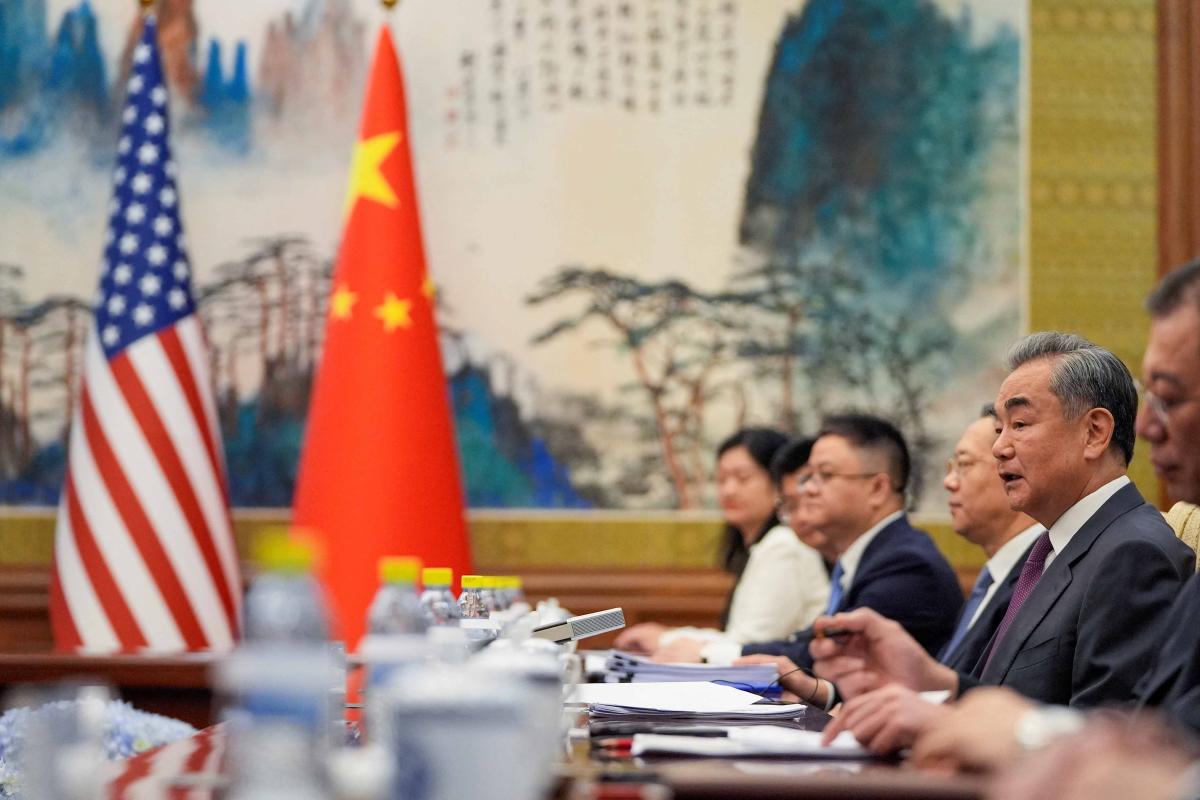
UNITED NATIONS —China unveiled new climate commitments on Wednesday, using the stage of a United Nations climate leaders’ summit to push back against U.S. President Donald Trump’s dismissal of global warming a day earlier.
In a live address from Beijing, President Xi Jinping announced that China would cut greenhouse gas emissions by 7%–10% by 2035 and increase wind and solar capacity sixfold within the next decade. The move would raise the share of non-fossil fuels in China’s domestic energy consumption to more than 30%.
While this marked the first time the world’s largest emitter pledged an actual emissions reduction rather than just slowing growth, the target fell short of expectations. Climate experts had anticipated a cut closer to 30%, in line with Beijing’s long-term net-zero by 2060 goal.
Without naming the United States, Xi criticized countries retreating from the Paris Agreement, saying, “Green and low-carbon transformation is the trend of our times. Despite some countries going against the trend, the international community should stay on the right track.”
Trump, in his UN General Assembly speech on Tuesday, had blasted climate change as a “con job,” called scientists “stupid,” and doubled down on fossil fuel expansion while announcing a second U.S. withdrawal from the Paris pact. Analysts said the stance risked ceding global leadership in clean energy to China.
“Trump wants fossil fuels, and the U.S. is indeed a powerful petro-state,” said Ian Bremmer of the Belfer Center. “But letting China become the sole electro-state is the opposite of making America great again.”
Environmental observers described Beijing’s new target as cautious, with Li Shuo of the Asia Society noting that China’s renewable sector is expanding faster than its official pledges suggest. Still, China’s dominance in green technology, combined with Washington’s retreat, could accelerate its role as a global climate leader.
The summit, hosted by UN Secretary-General Antonio Guterres on the sidelines of the General Assembly, also saw pledges from other major economies. Brazil committed to cut emissions by 59%–67% by 2035 and intensify anti-deforestation efforts. The European Union promised to reduce emissions 66%–72% by 2035, while Australia pledged cuts of 62%–70% below 2005 levels.
Small island states, represented by Palau, pushed for stronger action, citing international legal obligations. “Those with the greatest responsibility and the greatest capacity to act must do far more,” said Palau President Surangel Whipps.
Guterres acknowledged progress since the Paris Agreement, which has lowered projected warming from 4°C to 2.6°C. But with global temperatures already 1.2°C higher than preindustrial levels, he warned, “Now, we need new plans for 2035 that go much further, much faster.”
Despite the pledges, activists and experts said the world remained short of the ambition needed to meet the 1.5°C goal and avoid the most severe climate impacts.