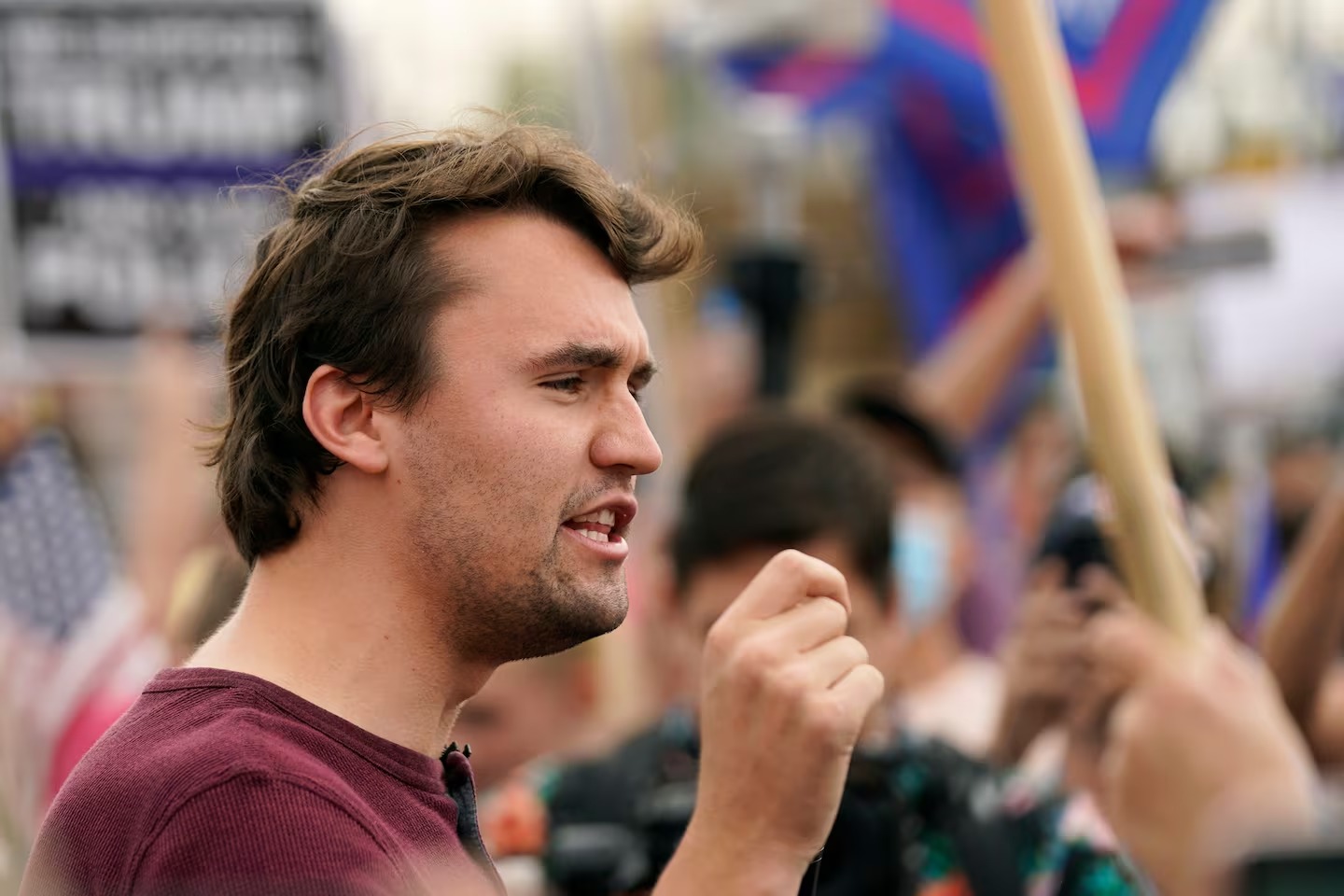
The assassination of conservative activist Charlie Kirk has reignited a fierce debate over the meaning of free speech in the United States, shaking political leaders and advocacy groups across the nation. Kirk, a right-wing commentator, was fatally shot while speaking at an outdoor event in Utah, prompting vigils and renewed arguments over the limits of the First Amendment. As Americans mourned his death, tensions rose when several high-ranking Democrats accused President Donald Trump of weaponizing free speech issues to silence critics and control public discourse.
On Thursday, controversy deepened after Trump applauded ABC’s suspension of talk show host Jimmy Kimmel, who accused conservatives of exploiting Kirk’s killing for political gain. The American Civil Liberties Union criticized the administration’s actions, saying they resembled McCarthy-era tactics of silencing dissent. ACLU director Christopher Anders warned that government officials were “abusing their power to stop ideas they don’t like,” calling the trend a direct threat to democratic values. These accusations have added fuel to an already polarized national conversation.
The First Amendment, ratified in 1791, guarantees freedom of speech, religion, press, and assembly—rights Americans consider central to their identity. Georgetown law professor David Super described the amendment as “how we identify ourselves as a nation,” noting that Americans’ diverse backgrounds are unified by a shared belief in open dialogue. Legal experts like UCLA’s Eugene Volokh stressed that even offensive or morally repugnant speech is protected, but they also highlighted the long history of attempts to suppress dissenting voices throughout U.S. history, from the Sedition Act of 1798 to the civil rights era.
Tensions escalated further when U.S. Attorney General Pam Bondi announced the Justice Department would pursue those engaging in “hate speech” tied to Kirk’s death. Republican Senator Ted Cruz quickly countered that the Constitution explicitly protects hate speech, forcing Bondi to clarify she meant violent threats, not unpopular opinions. Meanwhile, conservative commentator Tucker Carlson warned that restricting speech could spark “civil disobedience,” and other right-wing figures accused Trump of hypocrisy after his recent executive order criminalized flag burning, despite a Supreme Court ruling protecting it under free speech rights.
Former president Barack Obama criticized the administration’s actions, accusing Trump of taking cancel culture “to a new and dangerous level” by targeting media outlets, universities, and entertainers. Conservatives, however, argued that progressives have long silenced opposing voices and are now weaponizing Kirk’s murder to undermine free expression further. As Americans mourn Kirk’s death, the national debate over speech, censorship, and political power shows no sign of easing, suggesting a prolonged struggle over one of the country’s most cherished rights.