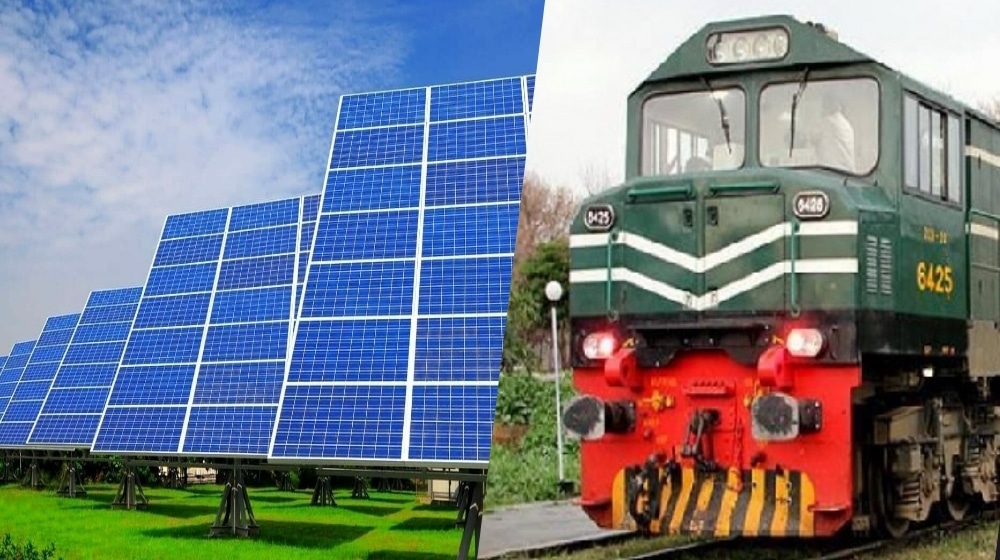
The government has switched 37 railway stations to solar energy to reduce electricity costs. This shift will save Rs163.52 million annually. Out of these, 28 stations are in Punjab and nine are in Khyber Pakhtunkhwa. Major Punjab stations include Lahore Cantt, Gujranwala, and Okara City. KP stations such as Peshawar City and Nowshera are also solar powered.
Moreover, the government plans to solarize 155 stations across the country. Currently, 42 more stations, including 23 in Multan and nine in Rawalpindi, will be completed by December 2025. These additions will save Rs40.4 million yearly. Additionally, work is in progress to solarize 10 stations in Balochistan, which will save Rs9.18 million annually.
Furthermore, financial evaluations for 76 more stations are underway. This includes 61 stations in Sindh and 15 in Balochistan. The estimated cost for these projects is Rs198.23 million. Once done, they will save Rs113.86 million in electricity bills yearly. This massive solarization effort aims to reduce costs and promote clean energy.
In addition to solar projects, the government is upgrading railway infrastructure. The Asian Development Bank is financing a 500-kilometer track upgrade from Karachi to Rohri. Punjab is also dualizing tracks and supporting the Rawalpindi-Lahore fast train project. These upgrades will improve freight and passenger services significantly.
Finally, the Main Line-1 (ML-1) project remains central to railway modernization. It will connect Karachi to Peshawar with faster and better service. The government expects these efforts to boost regional connectivity with Central Asia. Overall, these projects show a strong commitment to a modern, energy-efficient railway system.