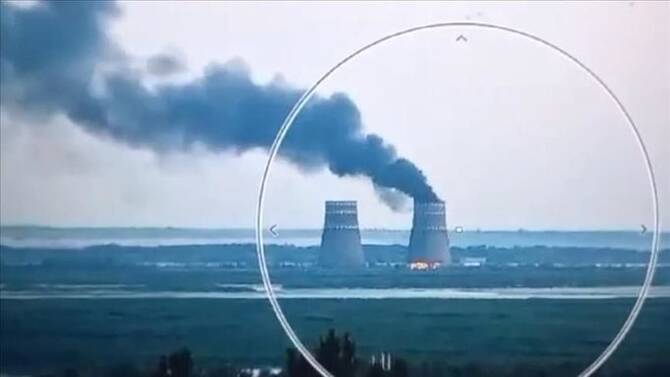
Ukrainian drone attacks overnight struck key Russian energy facilities, forcing a 50 percent capacity cut at the Kursk Nuclear Power Plant and sparking a major fire at Novatek’s Ust-Luga fuel terminal. The plant’s press service confirmed that an auxiliary transformer at unit three was damaged, triggering a fire that was quickly extinguished without injuries or radiation leaks.
Officials said radiation levels at the Kursk plant and surrounding areas remained within normal limits, easing fears of a nuclear hazard. However, the strike highlighted Ukraine’s ability to target critical Russian infrastructure near the border. Emergency teams worked to restore partial operations, though plant officials stressed that the attack had significantly disrupted electricity output and security systems at the site.
In Russia’s Leningrad region, about 10 Ukrainian drones were downed near the Baltic Sea port of Ust-Luga, but falling debris ignited a blaze at Novatek’s fuel export complex. Firefighters rushed to contain the flames at the massive terminal, which processes gas condensate into jet fuel, naphtha, fuel oil, and gasoil. Authorities said the fire was localized, and no casualties were reported.
Meanwhile, Russia’s defense ministry claimed its air defenses destroyed 95 Ukrainian drones across 13 regions overnight, including Crimea, Leningrad, and Samara. Civil aviation officials suspended flights for hours at several airports, including Pulkovo Airport near St. Petersburg, as drone threats disrupted normal air operations and triggered widespread travel delays.
In Samara, local authorities reported that Ukrainian drones also struck an industrial enterprise in the city of Syzran, though no casualties were recorded. Earlier this month, a Ukrainian strike had already forced the Rosneft-owned Syzran oil refinery to halt production, signaling a sustained effort to weaken Russia’s fuel supply chain and military logistics.
Kyiv has not immediately commented on the latest strikes, but Ukrainian officials have previously stated that attacks inside Russia aim to degrade Moscow’s war effort by targeting infrastructure vital to energy exports and military support. The continued escalation underscores how drone warfare is reshaping the conflict, directly impacting both Russia’s energy network and regional security stability.