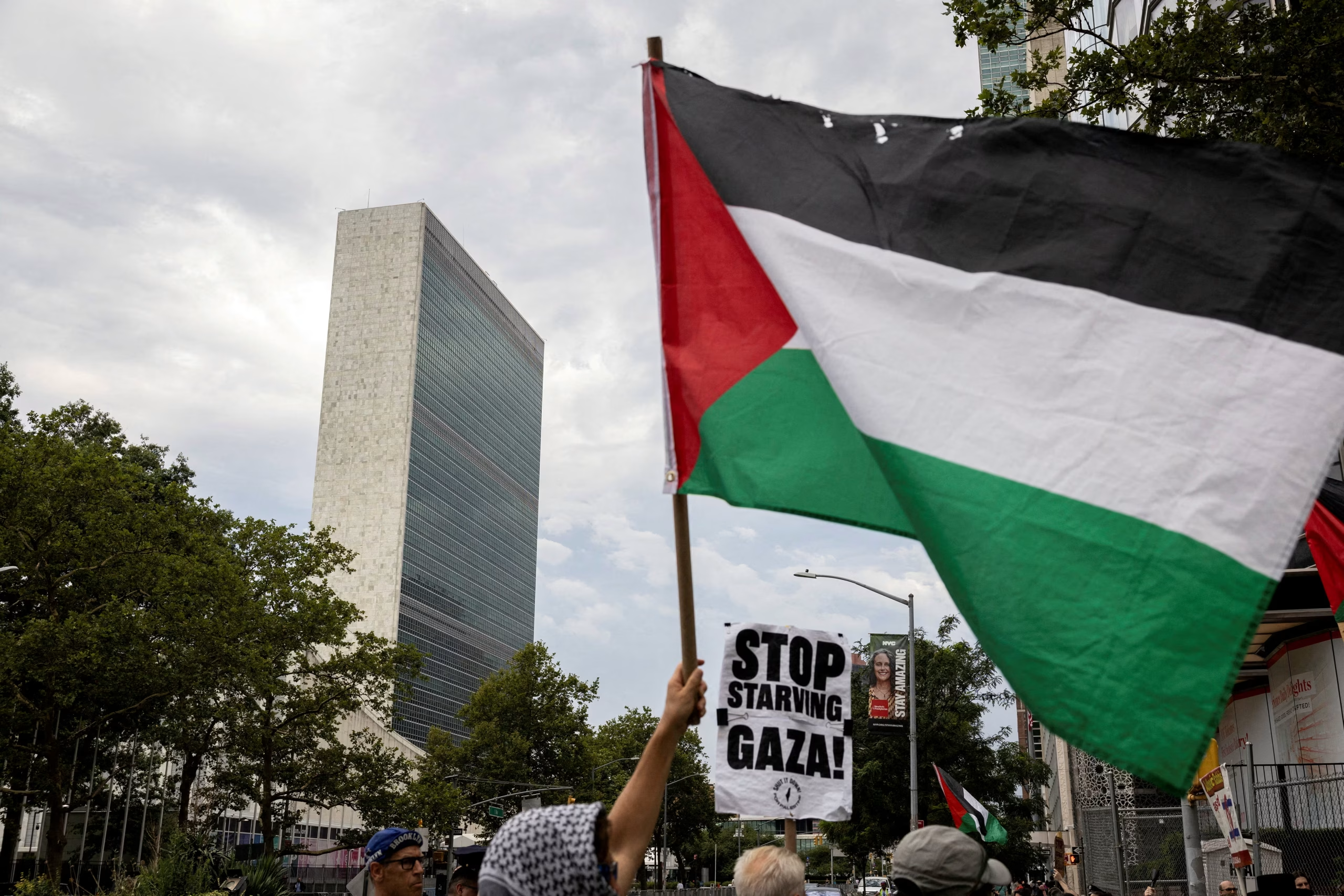
At a high-level UN conference co-chaired by France and Saudi Arabia, strong calls were made to push forward a two-state solution between Israel and Palestine. French Foreign Minister Jean-Noel Barrot opened the meeting by saying that there is no alternative to a political solution ensuring peace and security for both sides. However, Israel boycotted the event, and the United States dismissed it as a “publicity stunt.”
The conference came shortly after French President Emmanuel Macron announced plans to officially recognize a Palestinian state in September. Luxembourg also hinted at following suit, while over 200 British MPs have shown support for the move. Still, UK Prime Minister Keir Starmer believes recognition should be part of a broader peace plan.
Palestinian Prime Minister Mohammad Mustafa urged global recognition of Palestinian statehood and proposed an international force to support the process. He also stressed the need for Hamas to surrender control of Gaza as part of any future peace agreement. UN Secretary-General Antonio Guterres warned that the two-state solution now feels farther away than ever.
Despite past support for two states, the ground realities have become more complex. Continuous war in Gaza, expansion of Israeli settlements, and declarations to annex land have raised fears that a viable Palestinian state may become impossible. The Gaza war began after a deadly Hamas attack, triggering a large-scale Israeli military response that has caused massive destruction and loss of life.
The conference also focused on Palestinian Authority reform, Hamas disarmament, and the normalization of ties between Arab states and Israel. However, no new peace deals or normalization efforts were announced. Saudi Arabia stressed that it has no plans to recognize Israel unless a real political path toward Palestinian statehood is established.
While Israel and the US were absent, many nations expressed deep concern over the humanitarian crisis in Gaza. Jordan’s foreign minister condemned Israeli settlement activity and land grabs. Despite Israel’s claims of “tactical pauses” in fighting, most of Gaza remains in crisis, and the call for a permanent peace has only grown louder.