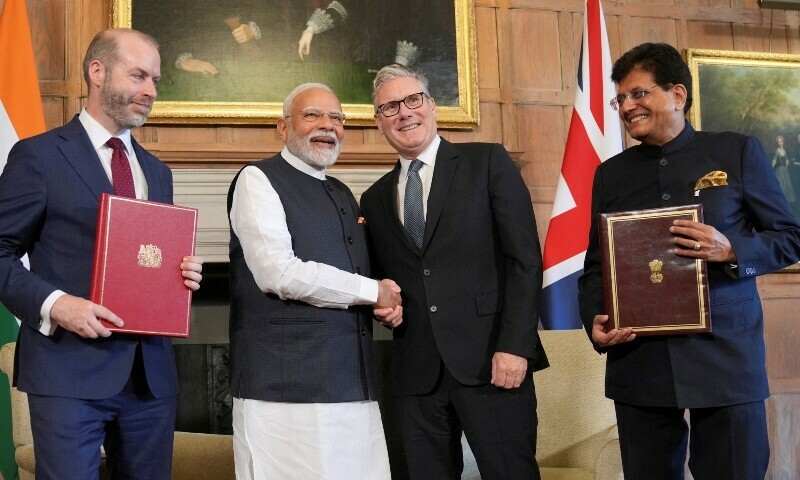
Britain and India signed a major free trade agreement during Indian Prime Minister Narendra Modi’s visit to the UK on July 24. The deal will cut tariffs on key goods such as textiles, Scotch whisky, and cars, while expanding market access for businesses in both countries. This agreement follows three years of negotiations and marks Britain’s largest trade pact since leaving the European Union in 2020.
The deal aims to increase bilateral trade by £25.5 billion ($34 billion) by 2040. Immediately, tariffs on Scotch whisky will be cut from 150% to 75%, reducing further to 40% over the next decade. India will lower car import duties from over 100% to 10%, under a quota system that will be gradually liberalized. Around 99% of Indian exports to Britain will benefit from zero duties, including textiles, while 90% of British tariff lines will see cuts.
British Prime Minister Keir Starmer called the deal a “huge benefit” for both nations, making trade faster, cheaper, and easier. Modi said the agreement will “go a long way” in advancing economic partnership. Both leaders also agreed to deepen cooperation in defense, climate action, and tackling cross-border crime, signaling a stronger strategic relationship.
A new chapter begins today in the India–UK economic partnership! The signing of the Comprehensive Economic and Trade Agreement (CETA) reflects our shared commitment to enhancing trade, driving inclusive growth and creating opportunities for farmers, women, youth, MSMEs, and… pic.twitter.com/FUOo4dkHLU
— Narendra Modi (@narendramodi) July 24, 2025
The pact includes provisions to facilitate temporary business visits and removes the requirement for workers to pay social security contributions in both countries during temporary postings. British firms will also gain access to India’s procurement market, especially in clean energy projects and service sectors like insurance.
The trade deal will come into effect after ratification, expected within a year. India failed to get an exemption from Britain’s Carbon Border Adjustment Mechanism, which may impose taxes on polluting imports from 2027. Meanwhile, talks continue on a separate bilateral investment treaty to further strengthen economic ties.