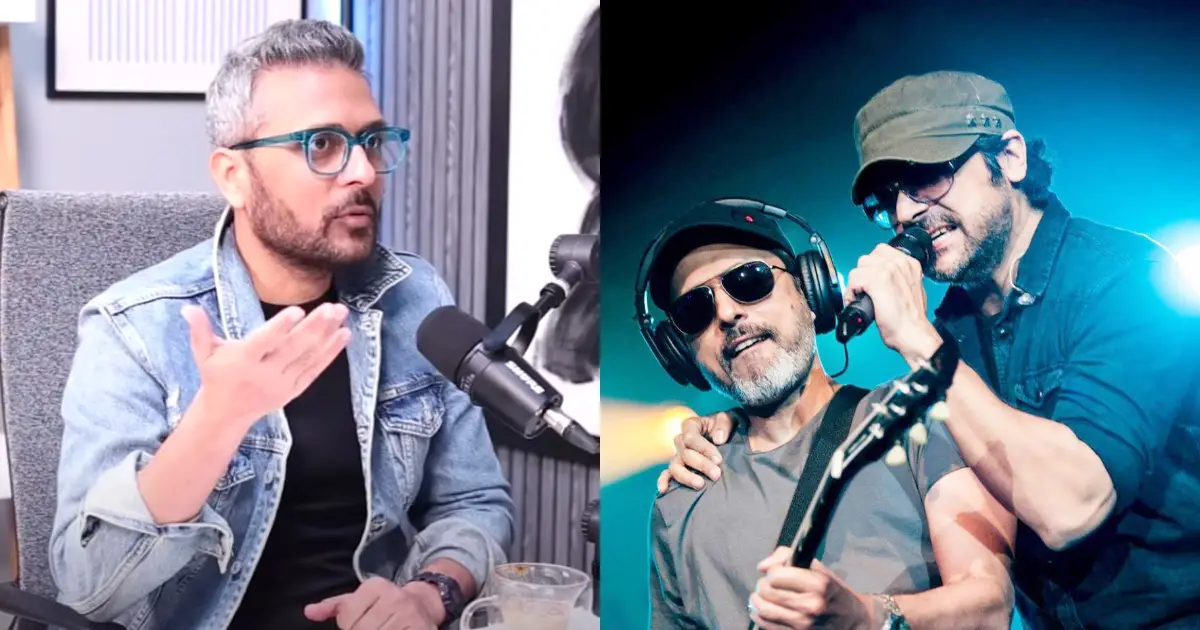
Bilal Maqsood recently shared a powerful memory of performing in India, where a crowd of 10,000 Indian fans chanted “Pakistan” during a Strings concert in Delhi. Speaking on The Rafay Mahmood Podcast, he recalled how music dissolved boundaries between the two nations in that moment. Maqsood described the experience as unforgettable, highlighting the unifying power of music over politics and geography.
Strings first gained attention in India after the surprise success of their 1992 hit Sar Kiye Yeh Pahar, which continued to play in Indian clubs even during the band’s break. When the duo returned with their Duur album in 2000, they discovered that their old fans had grown into industry professionals eager to support them. This warm reception gave Strings an unexpected launching pad in the Indian music market.
While touring India, Maqsood and Faisal Kapadia performed across dozens of cities, receiving overwhelming love from fans. Despite being new to professional music careers, the duo chose to leave behind their stable jobs to fully focus on their passion. Maqsood admitted that they didn’t plan for fame, but the positive response gave them the confidence to follow their artistic path.
As Strings gained fame, Bollywood also came calling. They composed music for major films like Zinda, but never let the glamour of the industry compromise their values. Maqsood explained how they once turned down a project after reading a script that negatively portrayed Pakistan, saying they would not work on something that conflicted with their beliefs.
Even within Bollywood projects they accepted, the band remained firm on matters like avoiding scenes with guns or cigarettes in their music videos. They believed their choices could influence young audiences and made creative decisions accordingly. “We knew kids would be watching, and we had to set the right example,” Maqsood emphasized.
Above all, Strings stuck to one rule: never perform someone else’s composition. Maqsood revealed they turned down a major Bollywood song offer for this reason alone. “Our principles mattered more than fame or money,” he said. For aspiring musicians, his message is clear—stay true to your voice, and respect will follow.