
Sindhis generally are a friendly crowd. They are hospitable, mild mannered and cultured. All one needs to do is to be understanding, respectful and on the same plinth. Their response in most cases to genuine overtures of such solidarity is instant, laced with grace and thoughtfulness. Thereafter, a fascinating equation of mutual respect and affection does not take long to develop.
Intermittent periods of martial law, the federation’s insensitivity and civilian misrule seem to have left these people deeply bruised and bewildered, more than any other in the country. There could be an endless debate on causes, effects and their justification. However, one of the major factors contributing to their ultra-sensitivity could be the fact that by nature and by the dint of continuity their fundamental social values and culture have not been disrupted since the times of Mohenjodaro and beyond. An affront hurts them deeply just as a favour wins them head over heels. Basically an open agrarian society, seafaring and suave, it amicably interacted with competing civilisations like the Mesopotamian, Gangetic and Persian, and religions like Hinduism, Buddhism and Islam, enriching themselves immensely in the process. Logically, a lot of good must rest with a people of such depth and rich heritage. These are the strengths that need to be identified and promoted when national integration and prosperity is sought. The federation, in their experience and esteem, seems to have lost its credibility a long time ago. They are essentially cordial. It is no wonder their saints and Sufi poets spoke so longingly of an all pervasive brotherhood and limitless tranquillity.
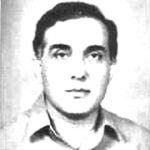
Qamar Bhatti was a senior ranking nationalist leader in late G M Syed’s Jeay Sindh Movement. By 1982, he was already in jail for over seven years, under trial for a dozen or so cases that included alleged murder, arson, anti-regime speeches, sloganeering, etc. His detention prolonged, according to the record dated well into 1976, with a brief release after the declaration of martial law in 1977. But soon he was locked up again. He was considered a perennial threat to the powers of the day whether elected or imposed.
I was then a martial law staff officer in divisional headquarters Hyderabad, responsible for law and order and students affairs. A scrutiny of record and reports painted him as one of the more volatile JSSF student leaders in the same category as Gul Mohammad Jakhrani, Abdul Wahid Aresar, Dodo Maheri and the like. He was detained at Khairpur Jail and used to be brought to Hyderabad for trial in one of the summary military courts. The call of duty and curiosity combined compelled me to ask the concerned court to send Qamar Bhatti to my office once it had completed hearing of the case next time.
A few days later, a very sick looking, skinny and pale détenu was brought into the office in handcuffs and leg irons under a heavy police escort. It was Qamar Bhatti, the police inspector announced. He looked exhausted, teetering on the verge of collapse. It was very hot outside in any case. His shackles were so uncomfortable he could not even sit properly on the chair. Seeing his pathetic condition I ordered that Qamar Bhatti’s chains and irons be removed. The inspector very reluctantly complied, warning that he was a very dangerous prisoner, and the responsibility for any untoward incident would rest on me. I accepted, asking the police to leave the two of us alone in the room. His wrists and ankles had calloused to a deep dark tan, leaving ugly marks of the handcuffs and shackles. But his eyes shone like that of a wounded tiger.
At first he declined the offer of food, but agreed on the condition that the cost would be considered a loan. A paltry sum that he had was already taken away by the police party for their tea, etc, en route. He had not eaten a full meal for long.
It took us some time to develop mutual confidence before he consented to give his version of his life. Nevertheless, the narration was effortless, truthfully lucid and painfully candid. A woeful tale unfolded of a perfectly self-made rural Sindhi youth who wanted to honestly progress in life, was drawn into student politics and victimised due to lack of powerful connections, unfaithful political sponsors and what is unforgivable in that ruthless game, his poor origins. Soon after admission in the local school he lost his father. With great difficulty his mother eked out a living to support her son’s studies in absolutely squalid poverty. A few years into the school he began to write for local Sindhi newspapers and magazines to supplement their meagre income. He continued this practise in Jamshoro University, where he rose to become the vice president of the students union, more by dint of his activism and strength of character than any patronage. That is where his troubles with the establishment really began. He was not for sale really, therefore, he had to be rode down or broken.
At the end of the fifth hour, it was abundantly clear that he was a prisoner of conscience framed deliberately in false cases through an unholy convergence of self-serving elements of the powerful establishment, changes of government notwithstanding. That was perhaps the last time he opened his heart to a perceived adversary in the hope that good sense might prevail. I knew his narrative was truthful. I recommended all cases against him be dropped to provide him a fresh start in life and to redress the wrong as much as was possible. The system turned the request down, diverting him for a long time to come or perhaps forever, I assume.
The writer is a retired brigadier of the Pakistan Army. He can be reached at [email protected]