 Out of Pakistan’s total fishery exports, 60 per cent are destined for China, Gwadar Pro reported on Monday.
The report says, that in the processing plant of a seafood company at the fish harbour of Karachi, workers are busying grading, cleaning, and packaging fresh shrimps. Twenty days later, they will make their appearance in some Chinese aquatic market.
From ribbon fish, croakers, cuttle fish, to shrimps, crabs, and lobsters, Chinese’ appetite for aquatic products has been growing with a considerable momentum since 2013. “Fishery is a big and emerging industry in Pakistan”, said Dr. Saeed Murtaza Hasan Andravi, Director Animal Sciences Institute NARC, Islamabad. It accounts for less than one percent of GDP, but provides vast employment opportunities for the under-developed in Pakistan.
Moreover, it can be a profitable profession and a promising means to earn foreign exchange.
Since aquatic products enjoyed tariff concession under the second phase of China Pakistan Free trade Agreement (CPFTA) implemented in Dec 2019, Pakistan’s fishery sector witnessed a boom in terms of export. According to data released by the State Bank of Pakistan (SBP), Pakistan’s exports of frozen seafood were increased by 83.70% to $73.947m in the first seven months of 2019-2020 fiscal year.
Statistics from Chinese customs show that in the first half this year, Pakistan’s fish meal exports to China topped 20,000 tons with a value of over USD 20 million.
But still, more is expected out of these abundant aquatic resources, especially amid the pandemic. “In our seafood industry, we have 450 million dollar export at the time, but we can increase it to 1 billion dollar”, envisaged Muhammad Zafar Kundi, Chairman of Pakistan Fisheries Export Association.”The requirements for fishing in Pakistan have not yet been met as in other countries because people are using traditional methods and they are living a hand to mouth life”, observed Irfan Ahmad, Incharge of Karachi Fisherman Cooperative Society.
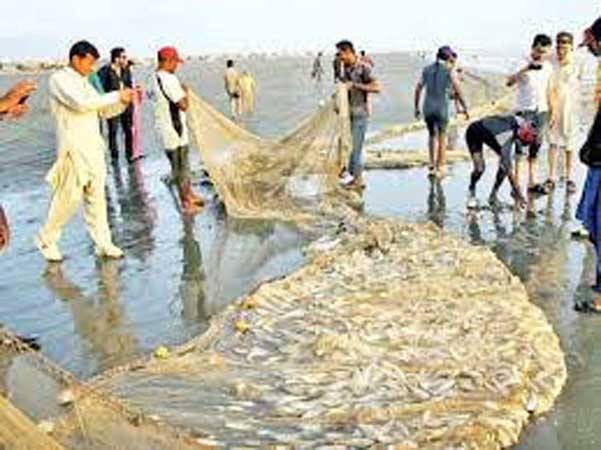
Most of Pakistani aquatic exports are captured fishes. Unlike processed products, they faced a lot of uncertainties.A net, a boat, and an engine–these are all the tools used by some fishermen. Unequipped by modern devices, they face the challenges of unpredictable waters and weathers. Engines can be damaged, wind may overthrow the boats, net can get torn, and people can get drowned… “We sometimes go deep into the ocean. If we are unable to find fish, then we have to bear the loss”, complained a fisherman based in Karachi.”If we have up-to-date cameras as China does and learn how to use them, we can find targets relying on the advanced technology instead of the old experiences”, Bashir Mahmood, a fisherman at Gwadar said.
Freshness is another important dimension of keeping the value of captured fishes. Statistics show that over 60% of the captured fishes are wasted as they have already been dead by the time they reach the market and can only be sold as fish meal. The United Nations estimates that Pakistan is losing $60 million annually due to low-value cost.”We are still using old methods that consume more electricity and add to the expenses. There is only one factory that has just started working on nitrogen-based quick freezing. We should use the latest technology because it freezes products fast and maintains their quality”, suggested Muhammad RafiqueAwan, CEO of Hei5 International Food Pakistan. “For inshore fishing, acquisition vessels, mostly provided by cold-chain logistics companies, are getting popular in China these years. With adequate freezing facilities, more fish can be saved from being wasted”, introduced Cui He, Chairman of China Aquatic Products Processing and Marketing Alliance.