
Foreign Minister Shah Mahmood Qureshi has previously claimed that Pakistan is going to take the case of Kashmir to the International Court of Justice (ICJ) subsequent to India’s revocation of constitutional protections for the region and extensive human rights abuses. Later on, the law ministry claimed that Pakistan can’t take Kashmir case to the ICJ. This decision, at least under current circumstances, is miscalculated.
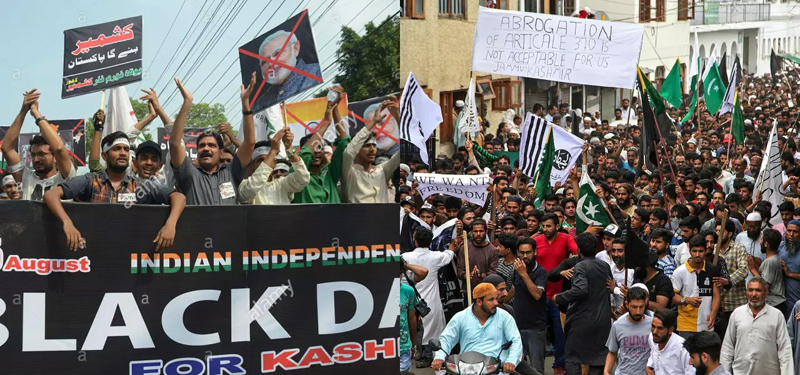 So much has been written on ICJ’s jurisdiction over the Kashmir issue in technical terms. To understand the ICJ’s jurisdiction in much simpler terms, two instances can be quoted. The first in when Pakistan knocked the doors of the ICJ against India when it shot down a Pakistani patrol aircraft near the Rann of Kutch in 1999, famously known as the Atlantique incident. At that instance the ICJ refused to entertain jurisdiction because of India’s 1974 declaration excluding jurisdiction over matters with dealings between present or former Commonwealth nations. This means that ICJ will have jurisdiction over a case when it comes through the consent of the parties to the dispute.
Now comes the second instance, the case of Kulbhushan Yadav, where the ICJ assumed jurisdiction and rendered a judgment. The ICJ could assume jurisdiction because both Pakistan and India were contracting parties to the Vienna Convention on Consular Relations. This means that the ICJ also has jurisdiction in cases where there is a treaty and where the treaty provides the ICJ with jurisdiction. This second condition, where there is a treaty and where it provides the ICJ with jurisdiction is important in the context of this column.
There are three specific treaties that India is breaching and which can be put before the ICJ to hold India accountable with sufficient evidence, especially in light of the current situation in Kashmir with extra-judicial killings, pellets blinding and paralyzing people and communication blockades being the order of the day. Pakistan should drag India by the collar before the ICJ over the massive human rights violations by India in Jammu and Kashmir.
The first treaty, the breach of which can be agitated before the ICJ, is the United Nation’s Genocide Convention of 1948. The Genocide Convention has not only both Pakistan and India as its signatories, akin to the Vienna Convention on Consular Relations, it also codifies customary international law, in simpler terms law which will bind parties even without them signing a treaty. While the Genocide Convention deals with genocide acts, committed both during peace and war time, it also clearly defines the act of genocide as meaning killings, causing serious bodily or mental harm, physical or mental destruction to any individual or a community on the basis of its ethnical, racial, national or religious status. There have been thousands of instances where India has used brutal force on the Kashmiri Muslim population, martyring them in fake encounters, Riaz Naikoo being one of the latest victims. The Genocide Convention further provides that disputes between the Contracting Parties relating to the interpretation, application or fulfillment of the present Convention, including those relating to the responsibility of a State for genocide or for any of the other acts enumerated in the Convention, shall be submitted to the International Court of Justice at the request of any of the parties to the dispute. Therefore, the Genocide Convention is the first law under which India can be taken to the ICJ.
The Indian side of Line of Control is currently suffering the worst humanitarian crisis the world has known in recent history, along with the novel corona virus India has also imposed a communications blockade, detained and martyred thousands of Kashmiris
The second treaty which can be used by Pakistan to hold India accountable before the ICJ is the 4th Geneva Convention, specifically Article 49 which provides that the “Occupying Power,” in this case India, shall not deport or transfer parts of its own civilian population into the territory it occupies. Yet that has been the Indian plan all along since the revocation of 35-A and 370 from India’s constitution and the promulgation of new domicile laws under the Jammu and Kashmir Reorganisation Order 2020, through which the Indian occupying force is trying to settle its Hindu population permanently from elsewhere into Kashmir and forcing the Kashmiri population out of their homeland. We can therefore, at least through provisional measure urge the ICJ to compel India to allow neutral observers to visit and report back on the genocide and demographic reshaping of the majority Muslim Kashmiri population in sharp defiance of international laws.
The third ground, albeit weaker than the first two, is the violation of the Simla Agreement of 1972 by India which clearly enunciates that the line of control resulting from the ceasefire of December 17, 1971, shall be respected by both sides without prejudice to the recognized position of either side and that neither side shall seek to alter it unilaterally, irrespective of mutual differences and legal interpretations. Nevertheless, by unilaterally changing the position of Kashmir and assuming it as a Union Territory, India has violated the terms of the Simla Agreement 1972. Therefore Pakistan must also urge this ground before the ICJ.
The Indian side of Line of Control is currently suffering the worst humanitarian crisis the world has known in recent history, along with the novel corona virus India has also imposed a communications blockade, detained and martyred thousands of Kashmiris. The federal government should review its decision to not go before the ICJ on account of the changed circumstances, specially the new evidence that has come before of India’s brutal violation of human rights in the Kashmir region, for example the United Nations Office of the High Commissioner for Human Rights’ reports on human rights violations in Kashmir and the report by the United States Commission on International Religious Freedom citing India as a country of particular concern.
It is high time that the government of Pakistan review its previous decision and take India before the ICJ, so at least Kashmir may have its day in court. Whether Pakistan succeeds ultimately or not is another question, but at least on the question of jurisdiction of the ICJ, Pakistan has a real probability of success. Even otherwise, it will lead further to the internationalizing of the Kashmir dispute, which is the need of the day.
The writer is a barrister, who has an interest in Pakistani current affairs, economy, constitutional developments, foreign policy and international law