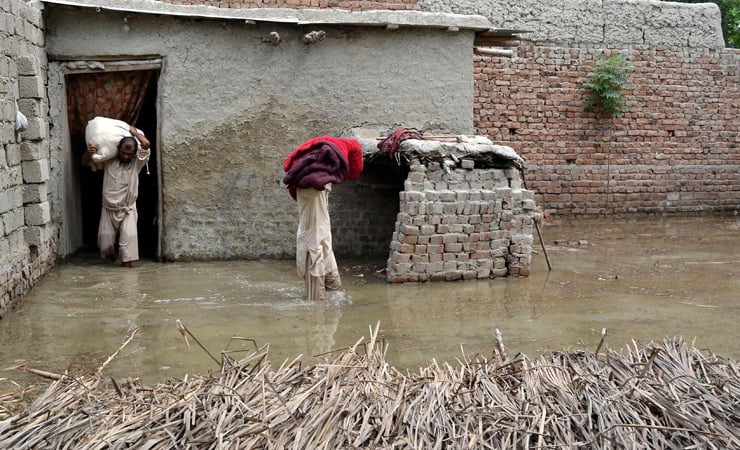
 Pakistan’s disaster management agency on Tuesday issued a high alert for flash floods, urban flooding and landslides across large parts of the country through July 24, after deadly monsoon rains killed at least 12 people in the northwestern Khyber Pakhtunkhwa (KP) province over the past 24 hours, taking the nationwide death toll to at least 53.
The National Disaster Management Authority (NDMA) said a strong monsoon system interacting with an approaching westerly wave was expected to bring widespread rainfall, including isolated heavy to very heavy downpours, across Gilgit-Baltistan, KP, Azad Kashmir, Punjab and northeastern Balochistan, increasing the risk of flash floods in rivers, hill torrents and seasonal streams.
“A strong monsoon incursion interacting with an approaching westerly wave is expected to affect the catchments of all major rivers during July 20-24,” the NDMA said in an alert. It warned that the weather system could trigger rapid rises in river flows, flash flooding in hill torrents and seasonal streams, and urban flooding in vulnerable cities.
It also warned of high flood levels in the Chenab River at Marala and the Jhelum River upstream of Mangla, while cautioning that flows in the Ravi and Sutlej rivers could increase depending on upstream releases from India’s Thein, Pong and Bhakra reservoirs.
Last year’s monsoon season saw riverine flooding inundate parts of Punjab, Pakistan’s agricultural heartland, after heavy rainfall combined with elevated river flows, damaging crops, infrastructure and homes.
The NDMA also warned of urban flooding in Rawalpindi, Jhelum, Gujranwala, Sargodha, Khushab, Sialkot, Gujrat, Narowal, Lahore, Okara, Chakwal and Attock, while issuing a separate landslide alert for parts of Chitral and Gilgit-Baltistan from July 21 to July 23, including key mountain roads vulnerable to rockfalls and debris flows. The warning comes as KP, the province hardest hit by this year’s monsoon season, reported fresh casualties and damage from heavy rains late Monday.
“The deceased included six men, five children and one woman,” the Provincial Disaster Management Authority (PDMA) said in a statement issued late Monday, adding that 14 people were injured and 14 houses were damaged, including one that was completely destroyed.
The authority said the latest rain spell damaged homes in Peshawar, Khyber, Mardan, Buner, Bajaur, Lower Chitral, Abbottabad, Mansehra, Tor Ghar and Kurram districts, taking the province’s monsoon death toll to 35 since the season began in late June.
Earlier on Monday, the NDMA, in its daily situation report covering the period up to 1300 hours, said 47 people had been killed nationwide since the start of the monsoon season, with KP accounting for the highest number of fatalities.
The report included six rain-related deaths in KP, while the later PDMA update put the figure for the same reporting period at 12, implying a nationwide death toll of 53 pending an updated NDMA situation report. The authority directed provincial and district administrations to continuously monitor rivers and streams, pre-position emergency response teams and relief supplies in vulnerable areas, and urged the public to avoid unnecessary travel to flood-prone and mountainous places.
Pakistan experiences annual monsoon rains from June to September, but increasingly erratic and intense weather linked to climate change has heightened the risk of flash floods, landslides and infrastructure damage, particularly in the country’s mountainous north and northwest.