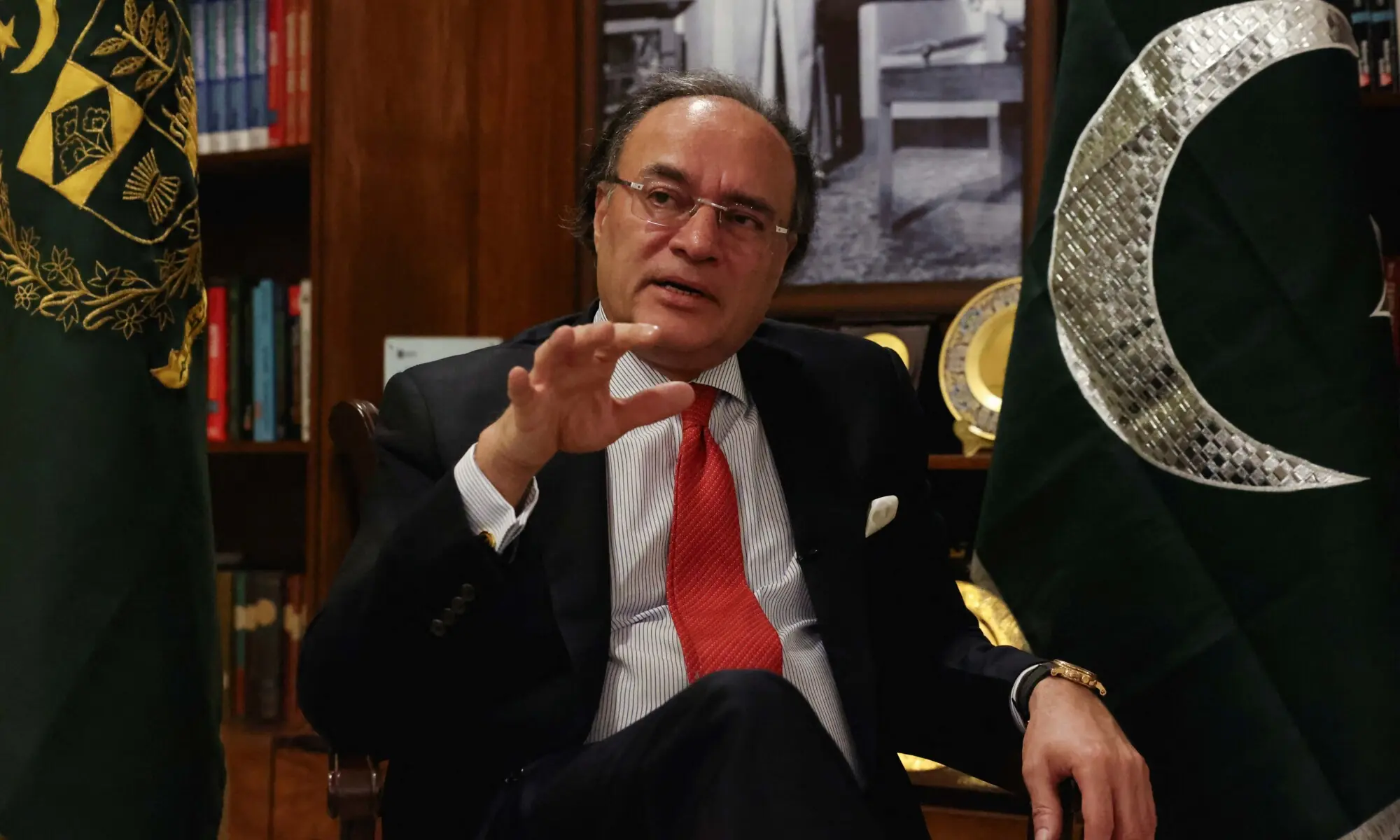
Pakistan’s Finance Minister Muhammad Aurangzeb has expressed cautious optimism about the country’s economic outlook following the reported agreement between the United States and Iran to end hostilities, saying there could be positive implications for growth next year but that it is too early to revise official projections.
In an interview with Reuters, Aurangzeb said the government had been closely monitoring the potential economic fallout of a prolonged conflict in the region. He noted that disruptions to energy infrastructure and supply chains had contributed to inflationary pressures and created uncertainty for economies dependent on stable energy markets.
The finance minister explained that while the easing of tensions could provide economic benefits, the impact would not be immediate. According to him, damaged infrastructure and disrupted trade routes would take time to recover before global supply chains return to normal levels.
Aurangzeb said Pakistan’s current budget projections for fiscal year 2026-27 remain unchanged, with the government targeting economic growth of 4 percent and inflation of 8.2 percent. However, he acknowledged that improved regional stability could create upside potential for the economy if conditions continue to improve.
The minister also outlined plans to reshape Pakistan’s external debt profile. He said Islamabad may increase commercial borrowing in the next fiscal year to gradually replace some bilateral debt without expanding the overall stock of external liabilities. The strategy aims to diversify funding sources while maintaining fiscal discipline under the country’s ongoing $7 billion International Monetary Fund programme.
Aurangzeb further revealed that Pakistan is exploring additional financing options, including Panda Bonds, Eurobonds, US dollar-denominated bonds and a proposed rupee-linked, dollar-settled bond issuance.
Discussing emerging sectors, he said the government intends to establish a regulatory framework for cryptocurrencies, tokenised assets and digital exchanges before considering taxation measures. He stressed that formalising the sector remains the immediate priority.
The remarks highlight Pakistan’s efforts to balance economic stability, debt management and financial sector reforms while navigating a rapidly evolving regional and global economic environment.