 A highly orchestrated disinformation campaign by the Indian media has been exposed, revealing a systemic mechanism aimed at projecting a false narrative of instability in Azad Jammu and Kashmir (AJK). This latest wave of propaganda relies on recycled, out-of-context video footage to internationalize and distort what began as a localized socioeconomic movement.
A prominent example of this manufacturing of fake news involves a video widely circulated by Indian news channels, claiming to show police opening fire on protesters in AJK. In reality, a fact-check reveals the footage is from an entirely different event in Karachi three months ago, when law enforcement resorted to aerial firing during an incident near the US Consulate. Similarly, years-old archival footage of the Lal Masjid standoff in Islamabad has been deliberately rehashed and presented as breaking news from AJK to exaggerate the state of unrest.
This external propaganda machine is heavily fueled by misleading content that initially circulates on digital platforms before being hijacked by Indian media networks. By twisting ground realities, these networks find ready-made material to fuel their narrative. When false or unverified content is generated on social media, external adversaries require minimal effort to exploit it to target the state’s security image.
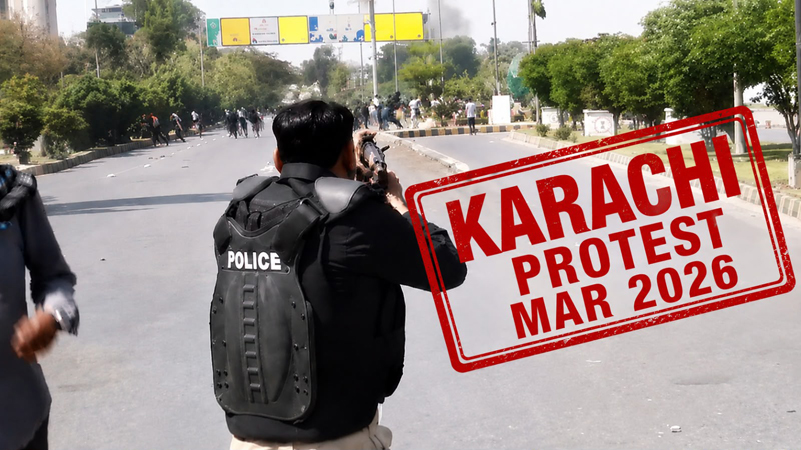
The narrative-building has further focused on the Joint Awami Action Committee (JAAC). Despite the AJK government banning the organization under the Anti-Terrorism Act due to its involvement in activities detrimental to state peace and security, Indian media outlets have consistently championed the group. Indian networks have framed the JAAC’s activities as a broader “freedom movement,” deliberately twisting a political agitation centered on economic issues, such as electricity tariffs, flour subsidies, and refugee seat allocations into an anti-state nationalist rebellion.
This systematic manipulation aligns with a decades-long pattern of information warfare by New Delhi. From the fabricated claims of neutralizing targets in the 2019 Balakot strike to Indian outlets broadcasting promotional Airforce videos and Arma 3 video game footages as “proof” of military operations, the reliance on fabrications remains high. Research indicates that during recent security frictions, fake news accounted for an overwhelming majority of Indian news broadcasts, needlessly escalating regional tensions.
Supported by thousands of state-backed fake accounts posing as local citizens, this coordinated strategy highlights the critical need for the public to scrutinize the origin of narratives flashing on foreign screens.