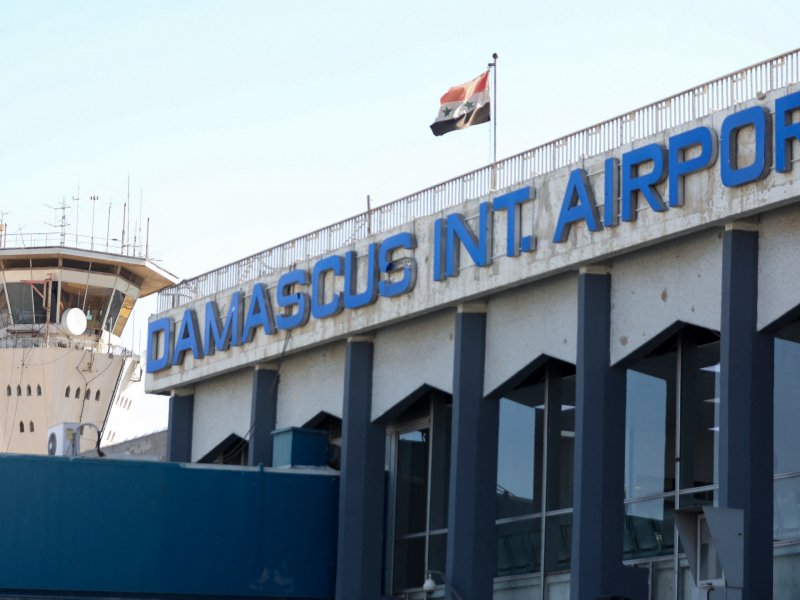
Iraq and Syria have temporarily closed their airspace and suspended flight operations following renewed military tensions between Iran and Israel, raising concerns about aviation safety across the Middle East.
Read More: Airlines reroute flights to avoid middle East after U.S. strikes on Iran
The decision came after fresh exchanges of attacks between Iran and Israel heightened fears of a broader regional conflict. Aviation authorities in both countries moved to restrict air traffic as a precautionary measure amid the rapidly evolving security situation.
According to aviation notices issued to airlines and operators, Iraq has closed its airspace for 72 hours. The restriction affects all commercial arrivals, departures and overflight operations. The notice came into effect on June 7 and is expected to remain in force for three days unless extended by authorities.
#Iraq and #Syria closed their airspace as a safety precaution on Sunday after their eastern neighbour #Iran launched #missiles across their territory towards targets in Israel.
In a brief statement, the Iraqi Civil Aviation Authority reported the closure of Iraqi #airspace for… pic.twitter.com/j6ffe3DBZT
— Gulf Times (@GulfTimes_QATAR) June 7, 2026
The closure has disrupted regional air traffic routes, forcing airlines to reroute flights and adjust schedules to avoid the affected airspace. Industry observers warn that prolonged restrictions could lead to delays, higher operating costs and congestion on alternative flight corridors.
Syria has also suspended flight operations and prohibited overflights through its airspace following international aviation safety warnings linked to the ongoing regional conflict. Authorities cited security concerns and the need to protect civilian aircraft from potential risks arising from military activity.
Operations at airports in the capitals of both countries have been affected. Flight arrivals and departures at Baghdad and Damascus airports were halted from late Sunday night, while airspace restrictions remained in place for several hours afterward.
The latest measures highlight the growing impact of geopolitical tensions on regional transportation networks. Airlines operating between Europe, Asia and the Gulf region often rely on Middle Eastern air corridors, making disruptions in the area particularly significant for international travel.
Read More: US-Iran conflict disrupts thousands of flights as travel chaos deepens
Aviation experts continue to monitor developments closely as uncertainty persists over the security situation. Authorities in both Iraq and Syria have indicated that further decisions regarding the reopening of airspace will depend on assessments of regional stability and flight safety conditions.