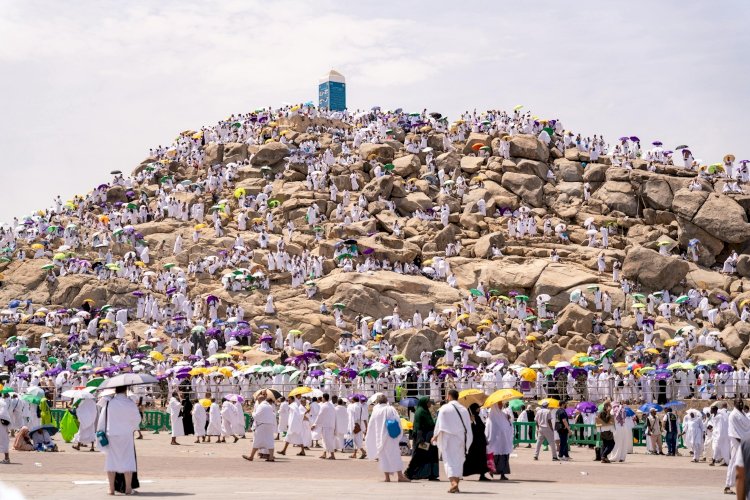
Millions of Muslim pilgrims from across the world are set to perform Wuquf-e-Arafah today (Tuesday), marking the most significant ritual of the annual Hajj pilgrimage in Saudi Arabia.
Read More: Nearly Eighteen Lakh Pilgrims Arrive In Mina For Hajj
The pilgrims had earlier arrived in Mina from Makkah in large groups, where they offered Zuhr, Asr, Maghrib and Isha prayers and spent the night in worship and supplication. The atmosphere in Mina resonated with the recitation of the Holy Quran and chants of “Labbaik Allahumma Labbaik” as pilgrims prepared for the key stage of Hajj.
On the 9th of Zul-Hijjah, pilgrims will gather at the Plain of Arafat, where they will listen to the Hajj sermon delivered from Masjid Namirah. Pilgrims will also combine and shorten their Zuhr and Asr prayers in accordance with Hajj rituals.
More than 1.5 million Muslims are at the site of the Hajj’s most significant ritual.
The climax of the Hajj is the gathering on Mount Arafat, about 10 kilometers from Mina, where the Prophet Mohammed delivered his final sermon. pic.twitter.com/F6i5IK5Qsx
— Roya News English (@RoyaNewsEnglish) May 26, 2026
Wuquf-e-Arafah is regarded as the central pillar of Hajj, during which pilgrims spend the day in prayer, repentance and remembrance of Allah. The pilgrims will remain at Arafat until sunset, seeking forgiveness and offering special supplications.
After sunset, the pilgrims will depart for Muzdalifah, where they will spend the night under the open sky. They will combine Maghrib and Isha prayers and collect pebbles for the symbolic stoning ritual to be performed in Mina.
On the 10th of Zul-Hijjah, pilgrims will return to Mina to perform Rami by throwing pebbles at the largest Jamarah. They will then offer animal sacrifices, shave or trim their hair and proceed to Makkah for Tawaf-e-Ziyarat.
Read More: Extreme Heat Expected in Makkah During Hajj Pilgrimage
Saudi authorities have implemented extensive arrangements to facilitate pilgrims amid extreme weather conditions. Measures include shaded walkways, cooling systems with water mist sprays, additional tree plantations and emergency services to protect pilgrims from intense heat and possible dust storms during the pilgrimage.