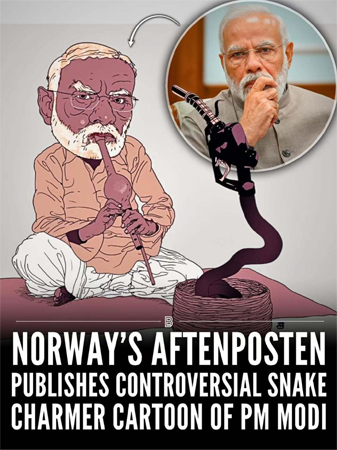
 Narendra Modi, the Prime Minister of India, has been a polarizing and controversial figure since his rise to power in 2014. BJP’s policies are influenced by the mother organization RSS; the flag bearer of Hindutva ideology. Collective character of BJP under Modi’s leadership has sparked intense debate and controversy, both domestically and internationally. This factor has strongly surfaced during Modi’s May 2026 tour of EU countries. The tour, intended to deepen India-Norway cooperation on green energy, Arctic policy, and technology, became a focal point for international scrutiny as protests and pointed media exchanges overshadowed the diplomatic agenda.
Nature and Scale of the Protests
As Modi arrived for meetings at Oslo City Hall, hundreds of demonstrators from the Sikh diaspora and Khalistan activists assembled with flags and placards. Protesters chanted slogans against Hindutva ideology and accused the Indian government of “transnational repression” and silencing dissent abroad. Images of protesters tearing the Indian tricolor and raising Khalistan flags circulated widely online, amplifying their message beyond Norway.
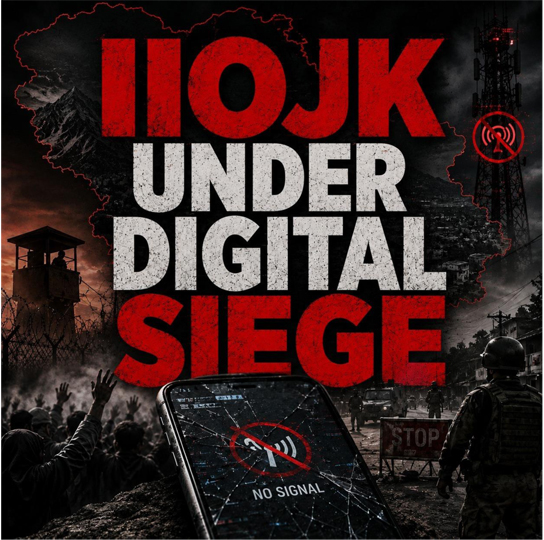
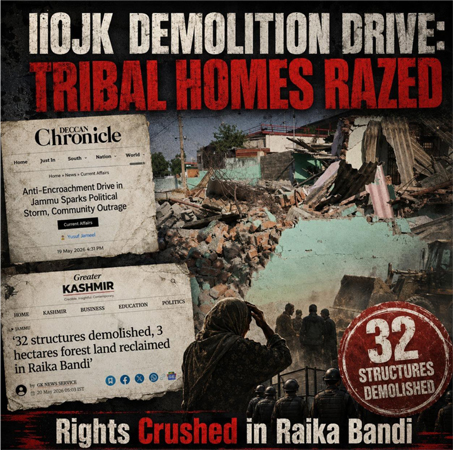
Kashmiri activists also joined the demonstrations near the Norwegian Parliament, carrying banners reading “Stop Genocide in Kashmir,” “Stop Killing in Kashmir,” and “Stop use of pellet guns in Kashmir”. The group Sikhs For Justice announced expanded “Khalistan Referendum” rallies across Norway, Sweden, the Netherlands, and Italy to coincide with Modi’s Nordic tour.
Questions on Press Curbs Went Viral!
The protests were not confined to the streets. During a press appearance at the government’s representative facility, a Norwegian journalist publicly questioned Modi about press freedom in India, asking why he does not “take questions from the freest press in the world”. The exchange went viral and sparked debate about democratic accountability. Later, at an Indian diplomatic briefing, journalist Helle Lyng asked, “Can you try to stop the human rights violations that goes on in your country?”. She later told BBC Hindi that confrontational journalism requires persistence, even without answers. The Government of India rejected the allegations, reiterating its commitment to justice and constitutional guarantees.
Honor ; Dishonor !
Protesters also questioned Norway’s decision to honor Modi with the Grand Cross of the Royal Norwegian Order of Merit while his government faced accusations of “transnational repression”. They argued that “awards and trade agreements cannot erase the growing international scrutiny over India’s treatment of minorities.
Modi’s Diplomatic Failure Under Scrutiny
India’s opposition parties, led by the Congress and the INDIA bloc, have mounted sustained criticism of Prime Minister Narendra Modi’s foreign policy, framing several recent episodes as “diplomatic failures” that compromise national interests. Their arguments focus on four broad themes: China policy, US relations, handling of terrorism and Pakistan, and the style of diplomacy itself.
China Factor: “Calibrated Capitulation”
The Congress has repeatedly accused the Modi government of weakness toward Beijing. General Secretary Jairam Ramesh described the Centre’s approach as a “4C policy of continued, calibrated capitulation to China”. He cited three grievances: the PM’s June 19, 2020 statement that gave China an “inexplicable clean chit” after 20 soldiers were killed in Ladakh; the alleged surrender of “traditional patrolling and herding rights in very many locations in Ladakh” during negotiations; and a record $115 billion trade deficit with China in 2025-26 that hurt Indian MSMEs. Ramesh also claimed the PM was silent on the Army’s revelations about China’s role in “planning, monitoring, and executing Pakistan’s response to Operation Sindoor” in May 2025.
Debacle in Relations with USA
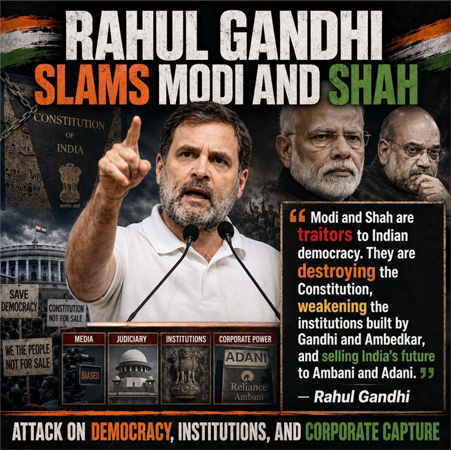
Opposition parties seized on President Donald Trump’s July 2025 threat of 25% tariffs plus penalties on Indian exports, calling it proof of foreign policy collapse. Congress MP K.C. Venugopal asked if Modi would “grow a spine and stand up to Trump”, arguing that “staying silent on Trump’s ceasefire statements” and warmth toward Pakistan was a “grave miscalculation”. Congress spokesperson Supriya Shrinate said the tariffs showed “how the BJP government and the PM have compromised India’s national interests”. The Samajwadi Party called it “another failure of the Central government’s foreign policy”. Rahul Gandhi linked trade to sovereignty, stating “India’s foreign policy is the result of the exploitation of a compromised individual”. He referenced a US waiver allowing India to buy Russian oil, saying “the US will tell us who we can or cannot buy oil from”. Mallikarjun Kharge argued that Modi “begged and pleaded with America for a onemonth extension on ‘permission’ to buy Russian oil,” which “hurts the pride of 1.4 billion Indians”.
Pakistan Factor: Nightmare for Modi
The INDIA bloc resolved to question the government’s “failures” on the Pahalgam terror attack and Trump’s repeated claims of brokering peace between India and Pakistan during Operation Sindoor. Jairam Ramesh asked why the PM was “quiet on the growing hyphenation of India with Pakistan” and the failure to isolate Pakistan diplomatically. In Parliament, Gaurav Gogoi and Priyanka Gandhi questioned why agencies failed to prevent the Pahalgam attack and why Modi “agreed to stop the war”. Kharge asked if the government had prior notice of the attack since Modi “cancelled his schedule three days before”. Rahul Gandhi claimed the CDS “should have the guts to say that my hands were tied behind my back by my own government”.
Poor Diplomacy: Tours, Press Freedom, and Rhetoric
Opposition leaders criticized Modi’s foreign travel and media engagement. After a journalist in Norway questioned Modi on press freedom, Congress alleged he “broke the democratic tradition of asking and answering questions”. Ramesh said the world saw a PM “not comfortable facing even a single question”. Rahul Gandhi criticized Modi for embarking on a fivenation tour after urging citizens to avoid foreign travel. Sharad Pawar defended Modi’s tours, saying “national interests should take precedence over politics”, but Shiv Sena (UBT) and AAP joined Congress in questioning the timing.
Economic-Diplomatic Linkages: Adani and Oil Prices
Kharge tied foreign policy to domestic economics, alleging “robbing common people and giving Adani a free pass from America – this is Modiji’s Compromised Model”. He linked the US dropping charges against Gautam Adani to fuel price hikes, asking why citizens were burdened if Russian oil imports continued. Gandhi alleged “Ambani buys oil from Russia and sells it abroad, and that money is used to fund Narendra Modi”.
Conclusion
Modi’s recent foreign tour illustrates how contemporary diplomacy now plays out on two stages: the negotiating table and the public square. While bilateral agreements on climate and trade moved forward, street protests and unscripted media questions ensured that human rights, press freedom, and minority issues shaped the visit’s global perception. For India, the episode underscores the challenge of projecting a “confident global power” while navigating diaspora activism and international media scrutiny. For hosts, it highlighted the tension between diplomatic protocol and its strong tradition of press freedom. The fact that RSS-linked circles are now compelled to conduct lobbying campaigns in the US, UK and Europe itself reflects that India’s international image problem has moved beyond social media criticism into mainstream diplomatic and policy discussions. Modi’s political dependence on RSS has effectively narrowed his diplomatic flexibility. Distancing himself from RSS risks weakening his domestic ideological base, while remaining closely aligned with it continues damaging India’s global liberal-democratic branding. Internationally, the distinction between “Modi government” and “RSS ideology” is rapidly disappearing. Global media, human rights bodies and Western policy circles increasingly view both through the same lens of majoritarian politics and minority-related concerns.