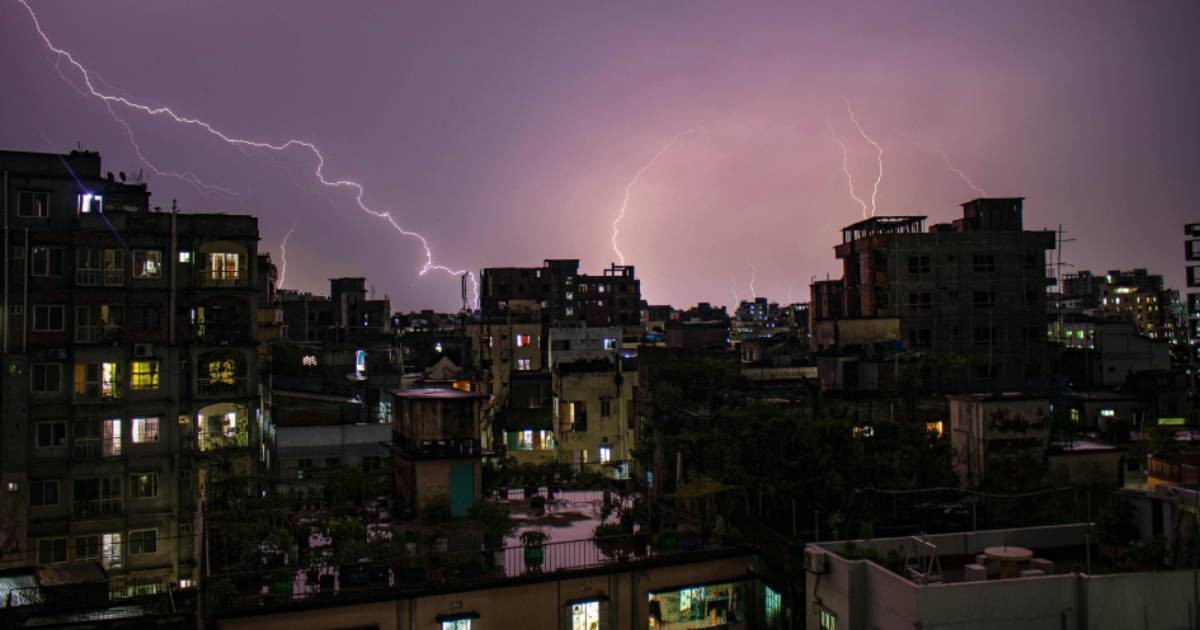
At least fourteen people lost their lives in Bangladesh after powerful lightning strikes hit multiple regions during seasonal storms that swept across the country on Monday. Authorities confirmed that sudden thunderstorms brought heavy rain and intense electrical activity, which created dangerous conditions across several rural districts nationwide. Emergency officials reported that victims were struck mainly in open areas while working outdoors during rapidly changing weather conditions across affected regions. Rescue teams rushed to different locations as hospitals received injured individuals, some of whom remain in critical condition after the incident.
Most of the victims were farmers working in open fields and laborers performing outdoor tasks when the lightning strikes suddenly hit their areas without warning. Local authorities stated that many of these workers had little protection from the severe weather conditions that developed quickly during the storm period. Officials confirmed that several others sustained injuries and were immediately transferred to nearby medical facilities for urgent treatment and observation under emergency care systems. Meanwhile, rescue operations continued as officials assessed damage and supported affected families in multiple districts across the country.
Read more : Lightning strike kills three family members in Shangla, rescue …
Lightning-related deaths remain a serious seasonal threat in Bangladesh, particularly during the pre-monsoon period when weather conditions become highly unstable and unpredictable across rural regions. Authorities noted that hundreds of people lose their lives each year due to lightning strikes, making it a persistent public safety concern nationwide over time. The government declared lightning strikes a natural disaster in 2016 after a major spike in fatalities during extreme weather events across the country. That year alone, more than two hundred people were killed in May, including a single-day toll of eighty-two victims.
Experts have linked the increasing number of lightning deaths to environmental changes, particularly deforestation that has reduced the number of tall trees in many rural areas. These trees once helped reduce lightning risk by absorbing strikes and providing natural protection for people working outdoors in open landscapes across agricultural zones. With fewer trees available, people now face higher exposure to direct lightning strikes during storms that form rapidly in humid weather conditions. Scientists continue to study how climate and land-use changes are contributing to rising electrical storm risks in vulnerable regions.
Read more : PMD forecasts rain and thunderstorms across Karachi and Sindh
Weather specialists explained that lightning incidents are most common between April and June, when heat and humidity levels rise and create unstable atmospheric conditions across the region. These seasonal factors combine to produce frequent thunderstorms that develop quickly and strike with little warning, especially in rural farming communities. Authorities have urged people to avoid open fields during storm warnings and seek shelter in safer indoor locations whenever possible during adverse weather periods. Public safety campaigns continue to focus on raising awareness about lightning risks and preventive measures in high-risk districts.
Officials have also stressed the importance of improving early warning systems to reduce future casualties linked to severe thunderstorms and lightning strikes nationwide. They emphasized that better communication tools and faster alerts can help vulnerable communities respond quickly when dangerous weather conditions begin to develop. Meanwhile, emergency services remain on alert as the country continues to experience seasonal storm activity across multiple regions in the coming weeks. Authorities have pledged stronger disaster preparedness efforts to minimize loss of life in future lightning-related incidents.