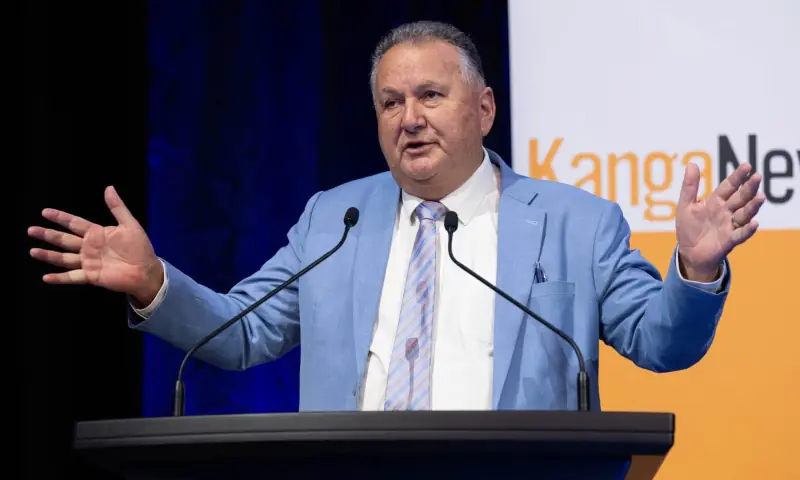
A senior New Zealand minister has faced strong criticism after making controversial remarks about a planned free trade agreement with India, describing it as a “butter chicken tsunami”.
Read More: New Zealand–India FTA promises jobs and export growth
The comments were made by Shane Jones, deputy leader of the NZ First party and Minister for Regional Development, during a radio interview. He said his party would “never accept” the proposed deal, which is expected to be signed in New Delhi next week.
The agreement, being negotiated by the government of New Zealand, has been described by officials as a “once in a generation” opportunity. It aims to expand trade access for New Zealand businesses into India’s large and rapidly growing consumer market.
However, NZ First has raised concerns that the deal could lead to increased migration and long-term financial commitments. Party leaders have reportedly opposed provisions linked to investment obligations and potential labour mobility.
Winston questions the Indian FTA pic.twitter.com/dyijXh9MlV
— New Zealand First (@nzfirst) April 22, 2026
Jones’ “butter chicken tsunami” remark has drawn widespread condemnation from community leaders and opposition politicians, who labelled the statement offensive and racist. Critics argued that such language unfairly stereotypes Indian communities and undermines diplomatic relations.
The Indian community in New Zealand also expressed concern, with representatives calling the remarks “deeply troubling” and urging political leaders to maintain respectful discourse during sensitive trade negotiations.
New Zealand Prime Minister Christopher Luxon described the comments as “unhelpful”, while opposition lawmakers emphasised the need for responsible communication as the trade deal progresses through parliamentary discussions.
Our Free Trade Agreement with India will be signed next week, an agreement that gives NZ exporters access to 1.4 billion customers.
It means more jobs on farms and orchards, more money coming into local communities, and more opportunities for Kiwis to get ahead. pic.twitter.com/87aL2LJ2Tr
— Christopher Luxon (@chrisluxonmp) April 22, 2026
Despite the controversy, negotiations for the free trade agreement continue. Officials have indicated that the deal could significantly boost economic ties but may also require political consensus, as support from opposition parties could be necessary for its approval in parliament.
Read More: EU and New Zealand seal ‘state-of-the-art’ trade deal
The incident has intensified debate in New Zealand over immigration, trade policy, and political rhetoric ahead of key legislative decisions.