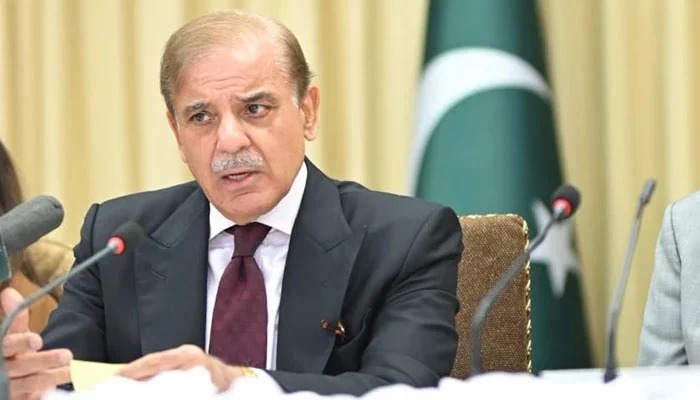
Prime Minister Shehbaz Sharif has reaffirmed the government’s commitment to supporting citizens during challenging economic conditions, stressing that providing relief to ordinary people remains a central priority for the administration. Speaking during a high-level review meeting in Islamabad, the prime minister said the state would not abandon the public in difficult times and would continue implementing measures designed to ease financial pressure on households.
During the meeting, officials briefed the prime minister about petroleum reserves and the government’s strategy to maintain energy stability amid rising regional tensions. Authorities assured him that Pakistan currently holds sufficient fuel reserves to meet domestic demand. The briefing emphasized that contingency planning and close monitoring of supplies are underway to ensure uninterrupted availability of petroleum products across the country.
Read more : Petrol price hike in Pakistan: Why comparing only fuel … –
Meanwhile, the government has introduced a digital system to distribute subsidies to the transport sector, aiming to make financial assistance more transparent and efficient. Officials explained that operators of buses, vans, trucks and cargo vehicles are now receiving support directly through digital wallets. This system, they said, reduces delays and ensures that subsidies reach intended beneficiaries without administrative obstacles or unnecessary intermediaries.
Prime Minister Shehbaz Sharif said the digital transfer mechanism reflects the government’s effort to combine transparency with efficiency while helping sectors that play a vital role in national economic activity. He noted that the transport and logistics sectors directly influence the cost of goods and public mobility. Therefore, supporting them through targeted subsidies could help reduce broader economic pressure on citizens.
Read more : How to get petrol in low price? Follow the process:
The prime minister also highlighted the government’s austerity measures, stating that savings generated through reduced administrative spending will be redirected toward welfare initiatives. According to officials, these funds will support programmes designed to assist economically vulnerable groups. Sharif emphasised that responsible fiscal management is necessary to create space for relief measures without placing additional burdens on national finances.
Several senior officials attended the meeting, including Musadik Malik, Attaullah Tarar, Ali Pervaiz Malik, and Special Assistant Talha Burki. Participants reviewed the current economic environment and discussed strategies to maintain energy security while continuing relief efforts aimed at stabilising transportation costs and supporting the wider economy.