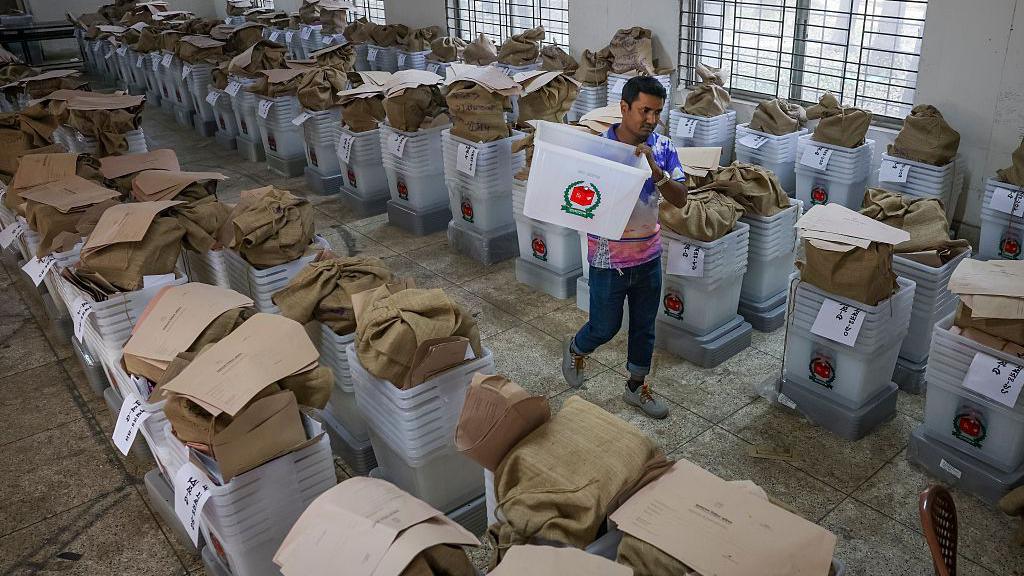
DHAKA: Bangladesh queued outside polling stations on Thursday as voting began in a landmark general election, marking the country’s return to democracy following the 2024 ouster of long-time premier Sheikh Hasina in a Gen Z-led uprising.
Read More: Bangladesh to hold referendum on July Charter for state reform
The election, widely viewed as pivotal, comes after months of unrest triggered by anti-Hasina protests that disrupted key industries, including Bangladesh’s garments sector, the world’s second-largest exporter. Analysts say a decisive outcome is crucial to ensure political stability in the nation of 175 million people.
After fascist rule people of Bangladesh have found an opportunity to vote. We hope we can take the country towards economic development and establish good governance in Bangladesh. Some incidents happened at night because some people wanted to stop the election. I am sure they… pic.twitter.com/nDPLAUFOvs
— The Hindu (@the_hindu) February 12, 2026
This election pits two coalitions led by former allies, the Bangladesh Nationalist Party (BNP) and Jamaat-e-Islami, against each other, with opinion polls giving an edge to the BNP. Hasina’s Awami League remains banned, and she is in self-imposed exile in India, opening space for China to expand its influence as relations with New Delhi deteriorate.
Unlike previous elections, which were often marred by boycotts and intimidation, more than 2,000 candidates—including independents—are contesting 300 seats in the Jatiya Sangsad, or House of the Nation. Voting in one constituency was postponed due to a candidate’s death, and at least 50 parties are participating nationwide, setting a new record.
The election coincides with a referendum on constitutional reforms, including establishing a neutral interim government during elections, restructuring parliament into a bicameral legislature, increasing women’s representation, strengthening judicial independence, and imposing a two-term limit for the prime minister.
Security has been heavily reinforced, with over 100,000 military personnel assisting nearly 200,000 police to maintain order. Polls opened at 7:30am local time and will close at 4:30pm, with early results expected by Friday morning.
Read More: India Bangladesh relations strained ahead of Bangladesh elections
Voter sentiment remains mixed, with corruption and inflation topping concerns. While some citizens face challenges traveling to cast their vote, many are determined to participate. “During Hasina’s time, we couldn’t cast our votes,” said driver Shakil Ahmed. “This time, I won’t miss it.”
Observers say the election’s fairness and acceptance of results will be a key test for Bangladesh’s democratic renewal.