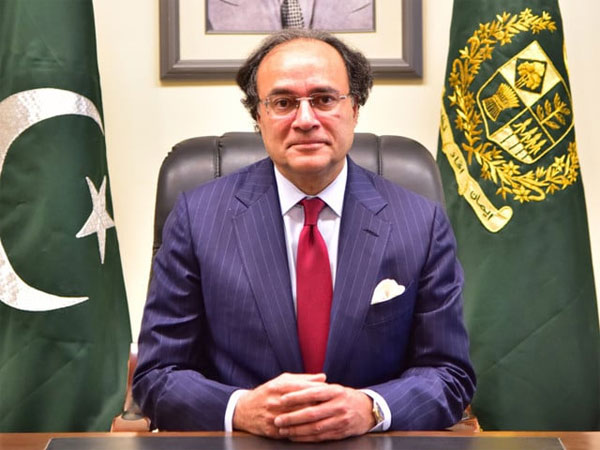
 Minister for Finance and Revenue Senator Muhammad Aurangzeb on Tuesday said Pakistan is preparing for its first-ever issuance of a Panda Bond in China’s capital market, calling it a major step in strengthening financial and economic ties between the two countries.
In an interview with China Global Television Network (CGTN), the minister said the planned bond reflects the growing strength, maturity and diversification of Pak-China relations, which are evolving from infrastructure-led cooperation into a broader, market-driven economic partnership.
Highlighting China as Pakistan’s largest trading partner, Senator Aurangzeb said bilateral trade reached nearly $17 billion during the first eight months of the year. He noted that relations between the two countries have steadily moved “from strength to strength” over several decades.
He said China has consistently supported Pakistan at international forums and has played a key role in its economic development, particularly through the China-Pakistan Economic Corridor (CPEC), the flagship project of the Belt and Road Initiative.
The minister explained that CPEC Phase-I focused on building major infrastructure, including roads, ports, airports and energy projects. He added that CPEC Phase-II has now been formally launched following high-level meetings with President Xi Jinping and Premier Li Qiang earlier this year.
According to Aurangzeb, the second phase focuses on monetising existing infrastructure and promoting business-to-business cooperation, marking a shift toward sustainable, private-sector-led growth.
Discussing Pakistan’s economic priorities, he identified agriculture, minerals and mining, artificial intelligence, and the digital economy as key sectors attracting Chinese investment. He stressed that the new phase of cooperation goes beyond capital inflows and places strong emphasis on knowledge transfer and technical assistance.
As an example, he said thousands of Pakistani agriculture graduates are studying in Chinese universities to learn modern practices, which will help improve productivity and modernise Pakistan’s agriculture sector. He also highlighted the role of Chinese technology companies, including Huawei, in training thousands of Pakistani IT graduates, calling these efforts potential game changers for the country’s digital transformation.
Commenting on global uncertainty, geopolitical tensions and rising protectionism, the minister said Pakistan remains focused on strengthening its long-standing partnership with China.