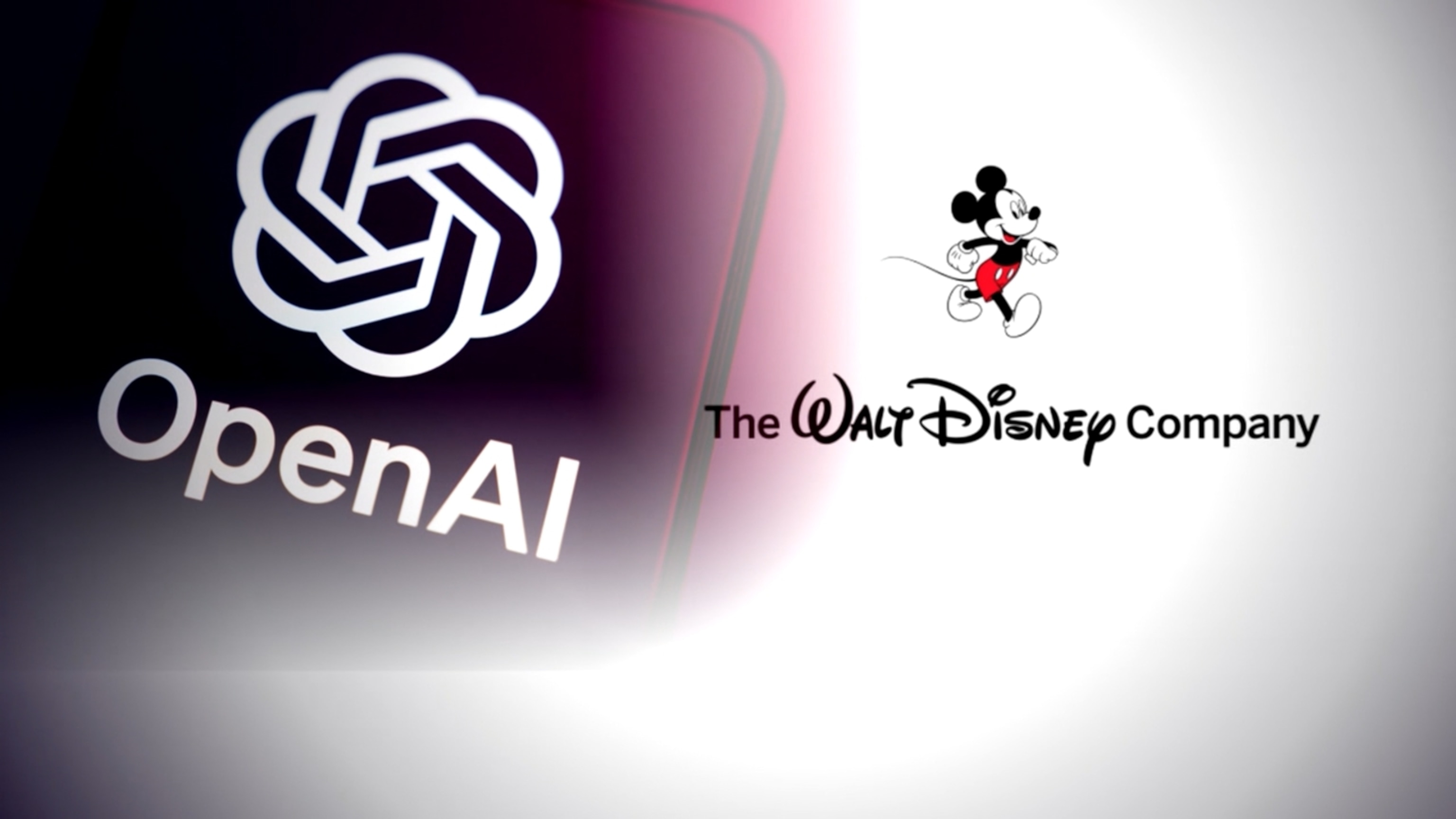
Disney’s recent partnership with OpenAI marks a notable change in how major Hollywood studios are choosing to engage with artificial intelligence. Instead of pursuing prolonged legal action, the entertainment giant has opted for collaboration, reflecting a more pragmatic response to rapidly evolving AI technologies.
Read More: Elon Musk recruits team to develop OpenAI’s ChatGPT rival
Under the deal announced on December 11, Disney will allow limited use of hundreds of its iconic characters on OpenAI’s Sora video-generation platform. Characters such as Mickey Mouse, Darth Vader, and Elsa can appear in user-generated content, but within clearly defined restrictions designed to protect Disney’s intellectual property.
This approach contrasts sharply with Disney’s recent lawsuit against AI image generator Midjourney, highlighting a strategic recalibration rather than outright resistance to AI. Industry analysts suggest Disney recognises that generative AI cannot be contained through litigation alone, especially amid ongoing legal uncertainty around copyright and fair use.
🔊 ‘It does feel like a milestone.’ Listen to @DawnC331 on the Reuters World News podcast as she discusses Disney’s $1 billion investment in OpenAI, a deal which means Disney will allow the startup’s Sora video generator to use its characters https://t.co/xiyeDt5roQ pic.twitter.com/j2V2IMUE5d
— Reuters (@Reuters) December 12, 2025
By choosing licensing over confrontation, Disney retains influence over how its characters are used while gaining insight into how AI-driven creativity is evolving. Experts believe this move acknowledges the possibility that courts may eventually side with AI developers, making negotiated agreements a safer long-term option.
Reactions from creative labour groups have been mixed. Some have welcomed OpenAI’s willingness to license content instead of using copyrighted material without consent, viewing it as a more ethical model for AI development. Others, however, remain cautious about the broader implications for creative jobs.
The Animation Guild has stated it will seek clarification from Disney on how “human-centred AI” principles will be applied. Concerns persist over how generative tools may be integrated into production workflows and whether they could reduce opportunities for writers, animators, and designers.
Adding to the debate, Disney confirmed plans to invest $1 billion in OpenAI and explore AI-driven products and experiences. Union members worry that user-generated Sora content on platforms like Disney+ could compete with professional productions or shape future storytelling priorities.
Read More: Olivia Rodrigo smashes chart records with debut album Sour
Despite scepticism, the deal is widely seen as a bellwether moment for the film industry. It signals that major studios may increasingly favour negotiation and licensing over legal battles as AI becomes deeply embedded in entertainment.