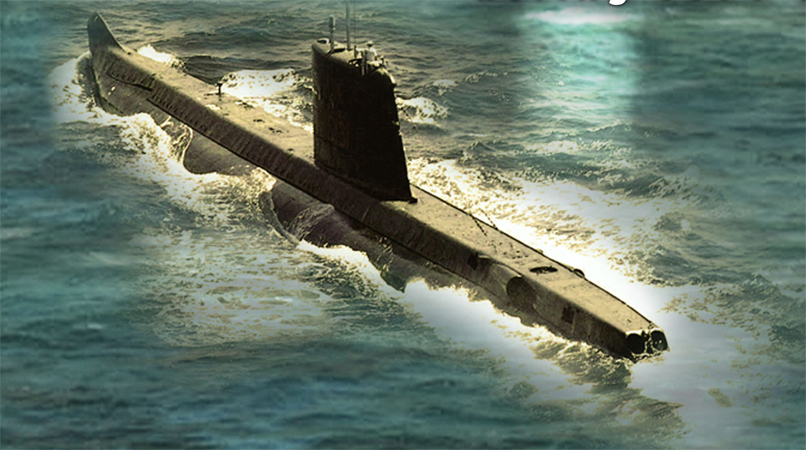
 Hangor Day occupies a distinctive position in Pakistan’s maritime history, marking an event that profoundly shaped Pakistan Navy’s operational philosophy and strategic development. Observed annually on 9th of December, it commemorates the 1971 engagement in which the diesel-electric submarine PNS/M HANGOR successfully sank the Indian frigate INS KHUKRI. This outcome was not simply a tactical triumph; it reconfigured regional naval assessments, demonstrated the decisive utility of undersea platforms in asymmetric environments and catalyzed long-term transformations in Pakistan’s maritime defense posture. The event is widely regarded as one of the most consequential submarine actions in post-Second World War history and remains central to understanding how Pakistan formulated its approach to maritime defense in an environment marked by asymmetry and regional rivalry. Hangor Day represents more than the commemoration of a wartime achievement; it exemplifies how a single successful operation can influence the evolution of a navy’s professional ethos, operational doctrine and long-term capability development. Its significance endures because it intersects with questions of deterrence, coastal security and the strategic value of undersea warfare in South Asia’s contested maritime spaces.
The historical trajectory leading to Hangor’s operational deployment reflects Pakistan’s early recognition of the advantages inherent in undersea warfare. During the 1960s, as South Asian maritime competition intensified, Pakistan sought capabilities that could compensate for disparities in surface combatant strength. The acquisition of Daphné-class submarines thus represented a calculated effort to employ stealth, mobility and acoustic advantage in order to counter a larger adversary navy. Hangor’s commissioning in 1969 marked a moment when Pakistan’s conceptual understanding of sea denial strategies began aligning with the operational realities of its maritime environment. The Arabian Sea, characterized by complex bathymetry and variable acoustic conditions, offered a theatre in which conventional submarines could play a decisive role. This contextual understanding is essential, because it foregrounds the strategic rationale that preceded Hangor’s wartime achievement and makes that achievement intelligible within broader defense planning.
The 1971 engagement itself occupies a central place in South Asian naval history because it demonstrated the disruptive potential of undersea platforms at a time when surface fleets dominated regional thinking. While patrolling near the Indian coastline, PNS/M HANGOR detected and engaged two Indian Navy frigates with precision and tactical discipline. The sinking of INS KHUKRI produced several immediate strategic effects: it curtailed offensive naval operations in the western theatre, forced Indian Navy to alter its risk calculus, and compelled a substantial diversion of anti-submarine warfare resources. These consequences illustrate that the significance of the event extends beyond the loss of a single vessel. Hangor’s survival during the ensuing counter-submarine efforts further validated the platform’s ability to exploit environmental conditions and operational stealth. The success demonstrated that well-trained crews, operating under a coherent doctrine of sea denial, could achieve results disproportionate to the size of the platform or overall fleet. This insight remains integral to Pakistan’s maritime strategy, which continues to rely on undersea assets as a core component of deterrence.
The strategic implications of Hangor’s action become evident when evaluated within the broader regional security environment. The Indian Ocean’s northern arc, particularly the Arabian Sea, functions as a critical zone for trade, energy transport and power projection. Within this context, Pakistan’s demonstrated undersea capability has played an important role in shaping adversary planning and in reducing vulnerabilities associated with surface fleet limitations. Hangor’s success intensified regional awareness of the risks posed by hidden threats beneath the surface and contributed to a gradual doctrinal shift in South Asia in which submarines became indispensable elements of national maritime posture. The event also highlighted the need for enhanced anti-submarine warfare competencies, not only for India but for all states operating in contested littoral regions. In this sense, Hangor contributed to a conceptual modernization of naval thought in South Asia by underscoring the complexity of undersea operations and their influence on crisis stability.
The contemporary significance of Hangor Day becomes even more pronounced when viewed alongside Pakistan’s ongoing modernization of its submarine fleet. The Hangor-class submarines currently being developed represents a technological and doctrinal advancement that extends the original legacy into the twenty-first century. Equipped with modern propulsion systems, enhanced endurance and precision weapons capabilities, these platforms enable Pakistan to conduct sustained patrols, enforce sea denial strategies and preserve maritime deterrence under conditions of increasing regional competition. The decision to name this class after Hangor is symbolically meaningful, but more importantly, it represents a continuity of strategic logic: the recognition that undersea forces provide indispensable flexibility and resilience in the face of shifting geopolitical pressures. This modernization also emphasizes Pakistan’s integration into broader security partnerships, which influence technical, operational, and strategic components of naval development.
The act of remembering Hangor is not simply ceremonial but pedagogical; it provides a framework for understanding the demands of modern maritime warfare, the responsibilities associated with operating undersea platforms and the importance of sound judgment in moments of high-stakes decision-making. By linking contemporary naval service to a landmark historical achievement, Pakistan Navy fosters a sense of mission that supports operational readiness and organizational commitment. At a wider analytical level, Hangor Day invites reflection on the nature of asymmetric advantage in maritime strategy. The episode demonstrates that smaller or medium-sized maritime powers can meaningfully influence regional dynamics through targeted investments in capabilities that exploit environmental, tactical and doctrinal strengths. The effectiveness of undersea warfare does not derive from numerical superiority but from a combination of strategic clarity, technological suitability and human proficiency. This approach remains relevant for states seeking to navigate complex security environments without engaging in costly fleet expansions.
In conclusion, Hangor Day merits academic attention not merely as a commemorative date but as a pivotal moment that shaped Pakistan’s maritime trajectory and contributed to broader regional strategic developments. The sinking of INS KHUKRI by PNS/M HANGOR stands as a historically consequential act that altered naval perceptions advanced the logic of undersea deterrence and demonstrated the potency of asymmetric maritime capability. Its enduring legacy is evident in Pakistan’s modern submarine programs, its evolving security doctrines and its institutional culture. Hangor Day continues to serve as a reminder that decisive maritime outcomes often emerge from a combination of strategic foresight, operational discipline and contextual understanding.