
Sindh Club, Karachi: Established in 1871, the magnificent building of the Sindh Club, one of the oldest clubs in Pakistan, and once known as the heart of British colonial society was constructed according to Victorian architecture patterns. To select the best design for the club a competition of architects was held and the design made by the member of the club’s committee, Le Mesurier, was selected. Richard Burton, one of the expert architects of the Europe, had warned against the use of Gothic architecture for the club building. After he observed Frere Hall building he had stated “the Veneto-Gothic, so fit for the place of Venice, so unfit for the city of Karachi. It is to be hoped that the new club would not adopt Veneto-Gothic”. The Sindh club covers around 09 acres of land and its large and spacious building that reflect the cultural heritage of the Indo-Italianate genre with the smooth blend of the Victorian Architecture is centrally housed.
The façade of the historic building utilises simple arcading composed of semi-circular openings on the ground and first floors and terminates in pitched roofs. Other blocks of the club erected later generally follow the Indo-Italianate pattern of the original structure. Since after its establishment special efforts have been made to preserve this Victorian architecture. All the passages, entrances and windows have been adorned with beautiful and the most minute details to enliven the Romanesque style. In 1986, the main club house, the millionaire’s row and the south block were declared a part of the National Heritage.
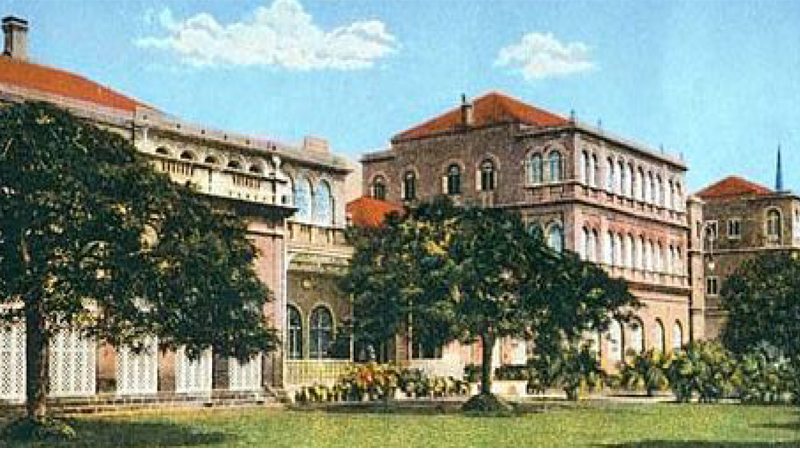
 To accommodate increasing number of club’s members, visitors and special guests, a number of deluxe, luxurious and grand quarters with the magnificent entrances and the gorgeous terraces and equipped with superb and state of the art facilities have been constructed. Moreover, state-of-the-art security systems have been installed throughout the club. Though the province is now spelled ‘Sindh’ the club still uses its old spelling ‘Sindh’ which was given by its founders. The Sindh club was exclusively for the British, native people were not allowed on club premises till the independence of Pakistan.
 Holy Trinity Cathedral: Established in 1844, built in 1855 and designed by Captain John Hill of the Bombay engineers, the stunning and well preserved Holy Trinity Cathedral was constructed from local buff-coloured Gizri sand stone as the first major church in Karachi. The original tall tower had five storeys and pitched roof that was built to serve as a light house for ships arriving in Karachi harbour but for the safety purpose two storeys of the tower were removed in 1905 and its new barrel vaulted roof was erected in the 1970s. The classical building with 800 seating capacity has Romanesque arches at the entry and Venetian single and double windows. Laudable efforts have made to maintain and renovate it.
Empress Market: The single storey building of empress market was constructed in 1889 at a well chosen site in the Saddar area. It is clearly visible from a great distance. The gothic style architecture with four galleries, each measuring 46 feet wide, has a tall central tower that rises to a height of 140 feet. The outstanding building has carved stone brackets, which support the balcony projections. It has exquisite leopard heads at the top four corners of the tower that display local craftsmanship. The building’s impressive clock tower has a large chiming clock with skeleton iron dials placed on the four sides but regrettably due to lack of repairing and maintenance it is not currently functional.
In Karachi, the biggest challenge in preservation of monuments is to keep the heritage features intact in their original forms, which requires architectural skills while making room for modern development
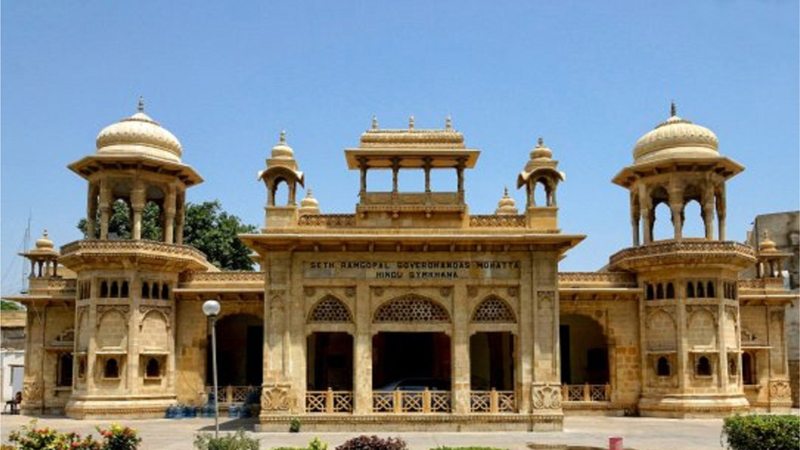
Hindu Gymkhana: The splendid architecture of the Hindu Gymkhana, which is situated at Sarwar Shaheed Road was constructed by Seth Ramgopal Goverdhan Das Mohatta in 1925. Agha Ahmed Hussain, the architect, constructed this building based on a Sub-continental style of architecture with the carved cupolas and miniaturised magnificence of a Rajasthani structure. Stone used in the construction of two feet thick walls of the Gymkhana were brought from Bajapur. The cupolas, balustrades and scales utilised in the architecture are derived from the Mughal-Hindu mixed style, which characterizes Akbar’s Fatepur Sikri. It has almost been dwarfed into invisibility by injudicious development.
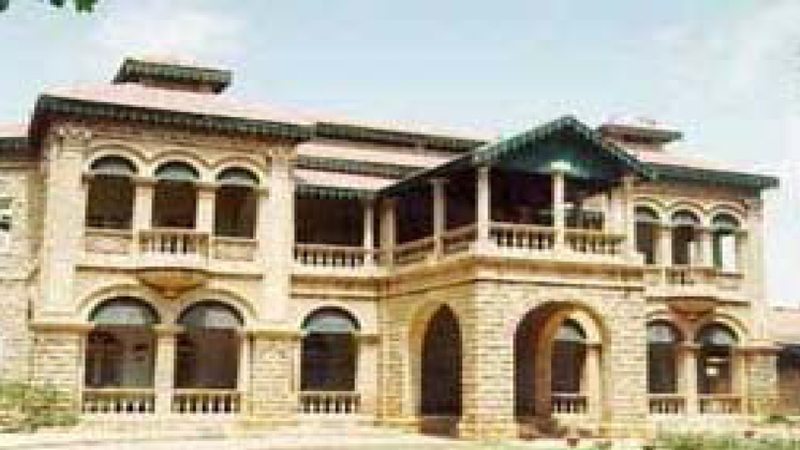
 Flag Staff House: Designed by engineer Moncriff and built in the colonial style with buff stone in fine ashler masonry for the Brigade Commander in 1865, Flag Staff House, located on Fatima Jinnah Road was used as the residence of General Douglas Gracy, commanding officer of Sindh. The approximate date of building this house was recorded from the tiles used on the roof. In 1947, Quaid-e-Azam Muhammad Ali Jinnah had bought this house from its owner Sohrab Katrak, a leading citizen of Karachi. After he died, Fatima Jinnah lived in the house for many years. Currently, the historical architecture is owned by the Federal Ministry of Culture which plans to convert it into a museum-cum-library in memory of Father of the nation.
Recently, I learnt that most of the people do not give sufficient value and respect to Pakistan’s archaic architectural monuments. One of my Facebook friends commenting on my write-up written on the preservation of historical buildings saying, “Everything is finite, then why do you get so worked up about these historic places?”. I want to remind him and all of his like-minded people who are unaware of the advantages of putting our heritage intact that preservation and restoration of these buildings play a vital social, cultural and economic role. These buildings teach us about the world before our birth and promotes respect for people who lived in different times and different societies. The glorious architectural monuments are pride of our past and they make us unique in the world. The structures are great attractors of tourists and tourism is one of the significant sources of generating enormous jobs and incomes. Moreover, access to historical sites should be easy so people can relate to and understand their history better.
 According to Dr Noman Ahmed, chairman architecture and planning department NED university of Engineering and Technology, in Karachi the biggest challenge in preservation is to keep the heritage features intact in their original forms, which requires architectural skills while making room for modern development. The government should give incentives to owners of heritage structures so that they would be inclined towards their preservation.
The writer is an academic, and can be reached on Twitter @ARShykh
Published in Daily Times, November 15th 2017.