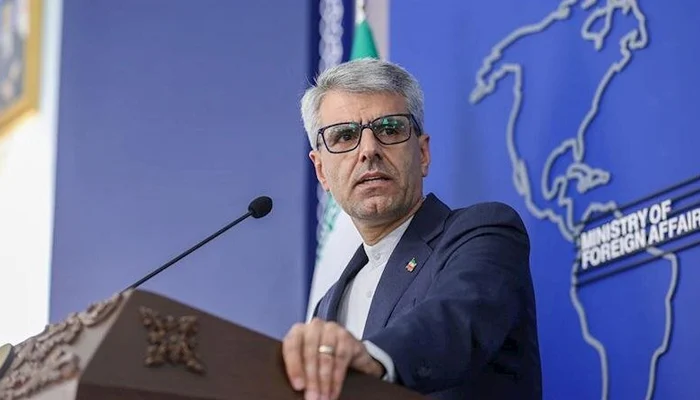
Iran on Monday strongly rejected US claims that Tehran had plotted to assassinate the Israeli ambassador in Mexico, calling the allegations “ridiculous” and “fabricated.” Foreign Ministry spokesperson Esmaeil Baqaei said during a press conference that the accusation was a deliberate attempt to damage Iran’s diplomatic relations with friendly nations. He stated that such baseless claims were part of Washington’s political propaganda against Tehran’s growing international ties, especially in Latin America and Asia.
Baqaei emphasized that Iran had no involvement in any such activity and labeled the entire matter as “completely made up.” He said these false accusations aim to portray Iran as a global threat while diverting attention from Israel’s aggressive actions in the Middle East. The spokesperson added that the Iranian government would continue to pursue peaceful diplomatic engagement despite repeated efforts by its rivals to create tension and mistrust.
Read more : Iran denies US, Israel claims of plot against ambassador in Mexico
Following the US accusation, Israel’s foreign ministry publicly thanked Mexico for allegedly foiling what it described as an Iran-directed terrorist network. However, Mexico’s foreign ministry later clarified that it had “received no information” about any such plot, contradicting Washington’s statement. Moreover, Iran’s embassy in Mexico described the entire story as “a great big lie,” asserting that it was part of a smear campaign designed to discredit Iran’s foreign presence.
A US official claimed that Iran’s Islamic Revolutionary Guard Corps (IRGC) Quds Force had initiated the assassination plan in late 2024 and that the operation was disrupted earlier this year. The official alleged that the network had attempted to recruit operatives through Iran’s embassy in Venezuela, a country known for its strategic alliance with Tehran. However, Iranian officials dismissed these details as politically motivated fabrications lacking any concrete evidence or credibility.
Read more : Trump signals openness to easing Iran sanctions
Meanwhile, tensions between Iran and Israel remain fragile after their brief but intense conflict earlier this year. In June, Israel launched a major bombing campaign targeting Iranian military and nuclear facilities, leading to a 12-day confrontation that also drew limited US involvement. Although a ceasefire has been in effect since June 24, recent accusations by Washington risk reigniting regional hostilities and undermining fragile diplomatic efforts to restore stability in the Middle East.