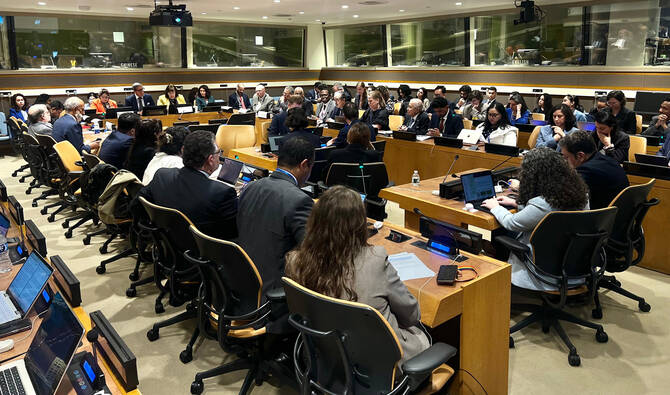
Pakistan has called on the international community to take firm action against the growing trends of Islamophobia, hate speech, and the political exploitation of religion. Addressing the UN General Assembly’s Third Committee, Pakistani delegate Saima Saleem highlighted the urgent need to counter discrimination, intolerance, and violence targeting minority groups, especially Muslims, across several regions. She warned that such dangerous ideologies threaten not only human rights but also global peace and social harmony.
During her address, Saleem condemned the deliberate use of hateful narratives and extremist propaganda to marginalize entire communities. She noted that in Pakistan’s neighbourhood, extremist ideologies have led to tragic consequences for cultural and religious diversity. Saleem specifically pointed out that certain states have adopted discriminatory citizenship laws, endorsed hate campaigns, and tolerated attacks on places of worship — actions that erode peace and stability.
Furthermore, Pakistan expressed deep concern over the systematic marginalization of minorities through disinformation campaigns and political rhetoric. Saleem urged the United Nations to strengthen international frameworks protecting religious and cultural rights. She emphasized that the UN must take stronger measures to uphold the principles of equality, respect, and coexistence that form the foundation of human rights law.
Read more : Pakistan Exposes India’s Human Rights Violations at United Nations Again
Speaking about Pakistan’s domestic efforts, Saleem reaffirmed that the protection of minority rights remains central to the country’s Constitution and the vision of Quaid-e-Azam Muhammad Ali Jinnah. She said Pakistan continues to ensure freedom of religion, equality, and inclusion for all citizens through strong institutional mechanisms such as the National Commissions for Minorities and Human Rights. These institutions provide minorities with representation in Parliament and local bodies, ensuring their voices are heard in national policymaking.
In addition, Saleem highlighted Pakistan’s welfare initiatives for minorities, including educational scholarships, restoration of worship sites, and dedicated welfare funds aimed at empowerment. She added that judicial and administrative reforms are continuously being strengthened to counter discrimination and promote social cohesion. Educational initiatives are also underway to instil tolerance, empathy, and respect among future generations — reinforcing Pakistan’s unwavering commitment to harmony and inclusivity at home and abroad.