 The much awaited Karachi Mobility Project (KMP), a transformative Yellow Line Bus Rapid Transit (BRT) initiative, has achieved significant progress with 38 per cent work completed on the Jam Sadiq Bridge, while preparations for bus procurement and operationalisation are set to begin later this year.
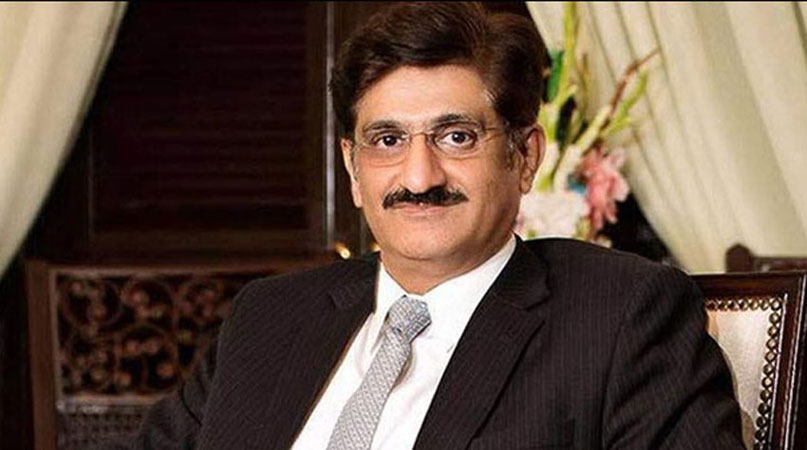
The project update came during a high-level meeting chaired by Sindh Chief Minister Syed Murad Ali Shah with the World Bank’s new Country Director, Ms Bolormaa Amgaabazar, provincial ministers, and senior World Bank officers.
The meeting reviewed the Sindh government’s $3.86 billion World Bank portfolio, covering 13 ongoing projects in education, health, social protection, urban management, and transport.
Karachi Mobility Project (KMP) – Yellow Line BRT: The KMP aims to enhance mobility, accessibility, and safety in Karachi’s key corridors, with a special focus on the Yellow Line BRT.
Jam Sadiq Bridge: Senior Minister for Transport Sharjeel Memon told the meeting that construction began in July 2024 and has now achieved 38 per cent physical progress, with Phase I scheduled for completion by August 31, 2025.
The two depots are under development. Depot 1 (since October 2024) and Depot 2 (since September 2024) have reached 16 per cent progress, with soil improvement and foundational work well underway.
As far as BRT Corridor Phase-I is concerned, the meeting was told that spanning 12 km with a budget of $100 million, the project secured World Bank clearance for bidding documents in May 2025. Bids are being invited, with Package 3B closing on August 29, 2025. A comprehensive Road Safety Audit has been completed.
Public-Private Partnership (PPP) Advisory: The meeting was briefed that the PPP advisory for the supply of buses, Phase I, including operational planning and financial modelling, is complete. Phase II, preparing bidding documents, will be ready by October 2025. Bus supply and operations procurement will be launched in December 2025, with service rollout by December 2027.
Phase-II Expansion, covering 7 km with a budget of $118 million, designs have been approved, with bidding documents aligned to ensure smooth progress. Feeder road upgrades covering 71 km are also being finalised.
Sindh Early Learning Enhancement Project was amed at improving reading skills and retention in primary schools, the project has awarded contracts for 295 schools across 12 districts, with 260 schools under construction. A dedicated monitoring dashboard and Android app provide real-time updates. Procurement of solar panels, filtration units, school furniture, and QR-code-based learning materials is underway, with completion expected by November 2025.
Social Protection & Mother-Child Health is aimed at strengthening Social Protection Delivery System is enhancing access to health services for women and children. The MAMTA app is being upgraded through PTCL Cloud, and district coordinators are being deployed. Hiring of tech staff and deployment of an integrated management information system has been completed.
Sindh Integrated Health & Population Project (SIHPP): Focused on reproductive, maternal, child, and adolescent health, the project has recruited 238 community health workers, with training to begin on September 25, 2025. Nutrition interventions will roll out from December 15, 2025. Sixty ambulances are being procured to strengthen referrals, while 15 dispensaries are being assessed for 24/7 upgradation.
CLICK & National Health Support Program, the Competitive and Livable City of Karachi (CLICK) project is improving urban management, tax administration, and solid waste management.
The meeting was told that to date, 1.8 million properties have been enumerated in a door-to-door survey. Meanwhile, the National Health Support Program (NHSP) has a Rs 10 billion allocation, with Rs 2 billion earmarked for FY 2025-26, already endorsed by the Project Steering Committee.
The chief minister and the World Bank country chief agreed to work together in close coordination so that the projects could be completed well in time for the public benefit.