In a recent Facebook post, Afghanistan’s Vice President, Amrullah Saleh, has blamed Pakistan for having a hand in continuing the war in Afghanistan, and for wanting to “conquer” Afghanistan.
 Saleh’s statement is a part of a pattern used by Afghan officials to blame neighbouring countries, especially Pakistan, for their own incompetence and failures.
At present, there are two groups fighting against the Afghan government: firstly, the Taliban and secondly, the Islamic State in Khorasan Province (ISKP). Together with the Afghan government, all three sides have caused civilian casualties and all three sides are responsible for it.
The Afghan government, in a recent airstrike, has killed nine civilians and injured another 11 in Balkh province.
Similarly, the Taliban were behind the attacks on the Afghan army on May 11, 2020, in Laghman province, and on May 14, 2020, in Paktia province-killing 15 people and injuring another 40, both military personnel and civilians, in total.
Likewise, ISPK claimed responsibility for targeting a funeral on May 12, 2020, in Nangarhar province; killing 40 people and injuring dozens. The ISKP also claimed responsibility for a series of “coordinated” bomb blasts on May 11, 2020, in Kabul, where several people were injured.
However, no armed group has yet claimed responsibility for the attack on a Kabul maternity home, located in a Shia neighbourhood, where 24 people-including newborns-were killed. Although the Afghan government has blamed the Taliban for the attack, the Taliban not only denied responsibility for the attack but also condemned it.
Given its sectarian agenda and previous lethal attacks against the Shia community, ISKP is the prime suspect behind the maternity home attack. In addition, lately, the Afghan government has alleged to have arrested several ISKP top figures, including its leader Abdullah Orakzai, known as Aslam Farooqi. The attack on the maternity home could also be retaliation from ISKP.
ISKP and the Afghan Government
With regards to ISKP, things seem to be more complicated than described by the Afghan government. According to the Afghan government’s narrative, most ISKP fighters are Pakistani nationals, supported by Pakistan. It’s true that Pakistani nationals are members of ISKP, but they’re mostly former TTP fighters, who are wanted in Pakistan.
Contrary to its statements, the Afghan government, starting in 2010, began cooperating with TTP militants who were fighting against the Pakistani government. TTP militants would escape military operations in Pakistan and take refuge in Nangarhar province. The Afghan government would establish contact with these groups to use them against both Pakistan and the Afghan Taliban.
Later, when the so-called Islamic State (IS) emerged in Syria and Iraq, TTP fighters swore allegiance to it, and thus ISKP emerged in eastern Afghanistan. In the beginning, there was an unannounced alliance between the Afghan government and ISKP. It took several months and multiple unprovoked attacks, by Afghan police and the US drones, in mid-2015 on ISKP targets that forced the group to turn against the Afghan government.
The Taliban see their violent tactics as leverage against the Afghan government
The Afghan Government’s Procrastination
The Afghan government has been dragging its feet and creating obstacle after obstacle for negotiations with the Taliban. It was decided between the US and the Taliban that in exchange for the Taliban’s releasing 1,000 Afghan government prisoners, the Afghan government would release 5,000 Taliban prisoners within 10 days of the signing of the US-Taliban deal.
Following the above-mentioned prisoner swap, the so-called intra-Afghan talks were supposed to begin. Despite two and a half months since the signing of the deal, the Afghan government has only released around 1000 Taliban prisoners. To put pressure on the Afghan government, the Taliban have resorted to increasing violence.
The Afghan government’s procrastination is understandable. If it expedites releasing the Taliban prisoners, the intra-Afghan talks will begin sooner rather than later. These talks will determine and decide on a future government. It is expected that, before going to some sort of election in which the Taliban will also field candidates, a transitional government-replacing the current Ghani government-will be agreed upon during the intra-Afghan talks.
A successful conclusion of the intra-Afghan talks would also mean the end of the Ashraf Ghani government. But because the Ghani government wants to remain in power, it’s been making excuses about releasing the Taliban prisoners, while simultaneously blaming the Taliban for the spike in the violence.
The Taliban are running out of patience
In keeping with the spirit of the US-Taliban deal, the Taliban continue to insist on their prisoners being released from the Afghan government’s custody on an urgent basis. To put pressure on the Afghan government, the Taliban have ramped up their attacks. The Taliban’s rationale to increase violence, however, doesn’t justify targeting civilians.
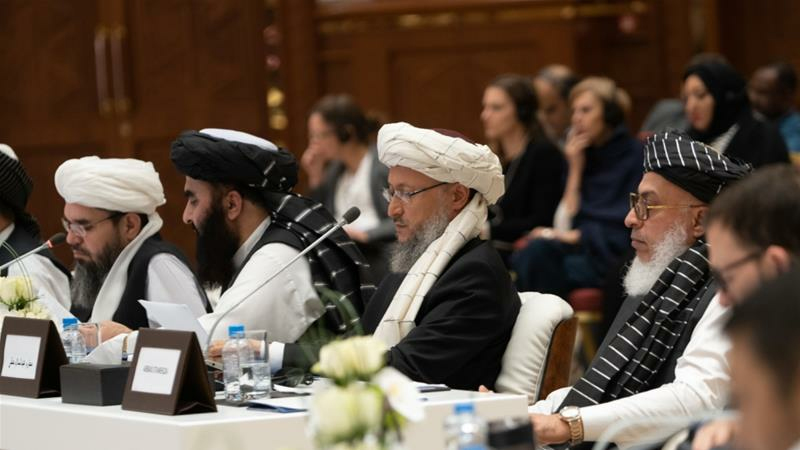
The Taliban see their violent tactics as leverage against the Afghan government. From the Taliban’s perspective, committing to a ceasefire before the start of the intra-Afghan talks will deprive them of important leverage vis-à-vis the Afghan government. To put the Taliban in a difficult position and to depict them in a bad light, the Ghani government has been asking them for a ceasefire. If the Taliban agree to a ceasefire, they’ll lose their only leverage; if they disagree, they’ll be blamed for the violence.
Although technically the US military doesn’t attack the Taliban anymore if Afghan forces ask for the US air support against the Taliban, the US will strike the Taliban. As such, the US has continued on and off to bomb Taliban targets since early March 2020. This has angered and disappointed the Taliban, who have warned that their agreement with the US could fall apart.
All to say that the situation in Afghanistan is complex. At the heart of it lies the Afghan government’s reluctance to expedite the peace process. To hide their own incompetence and to fend off growing domestic anger against the Ghani government, Afghan officials-including vice president Saleh-find it convenient to simplify things and blame Pakistan for all security incidents.
The writer is a former adviser to the Parwan governor in Afghanistan. He has written for Dawn, the Express Tribune, the Friday Times, Forbes, the National Interest, and The Diplomat, among others. He can be reached at rahiarwim@gmail.com