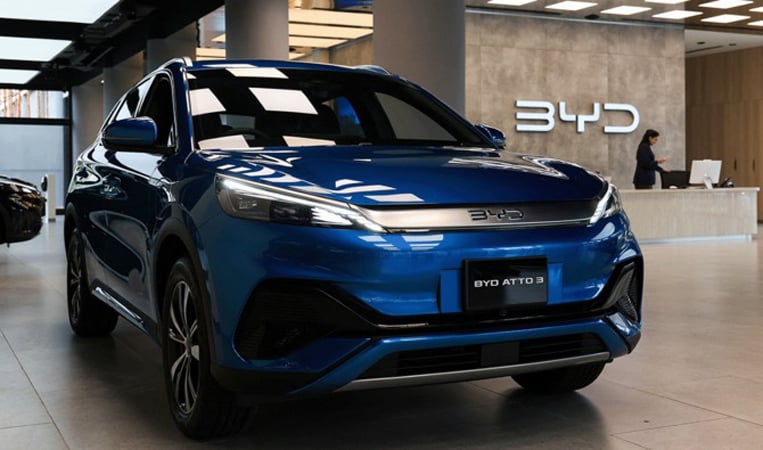
 Pakistan is reviewing its automotive policy with a renewed focus on accelerating the adoption of electric vehicles (EVs), the deputy prime minister’s office said on Monday, as the government seeks to reduce fuel imports, boost local manufacturing and transition toward cleaner transportation.
The review comes as Pakistan’s current Automotive Industry Development and Export Plan (AIDEP) 2021-26 approaches its expiry and the government moves to align the sector with its recently launched New Energy Vehicle (NEV) Policy 2025-30, which aims to increase the share of electric and other new-energy vehicles in new vehicle sales to 30 percent by 2030.
On Monday, Deputy Prime Minister and Foreign Minister Ishaq Dar chaired a high-level meeting to review the country’s Auto and Auto Parts Policy, with discussions centered on measures to promote EV adoption, strengthen domestic manufacturing and support growth in the automotive sector, according to a government statement.
“The committee was briefed on measures to promote EV adoption, strengthen domestic manufacturing, facilitate industry growth through supportive government policies, create new employment opportunities, boost exports, and contribute to Pakistan’s climate change mitigation efforts,” a statement from Dar’s office said. “DPM/FM underscored the importance of developing a competitive, innovative, and sustainable automotive ecosystem that supports economic growth, enhances industrial capacity, generates skilled jobs, and advances environmental sustainability through a future-ready automotive sector,” the statement added.
Pakistan’s transport sector is heavily dependent on imported petroleum products, making it a major contributor to the country’s fuel import bill and carbon emissions. Under the NEV Policy, the government has said a shift toward electric mobility could save more than 2 billion liters of fuel annually and generate nearly $1 billion in foreign exchange savings each year while reducing emissions. The current AIDEP framework introduced incentives for electric vehicles, including reduced duties on EV components and lower taxes on certain electric models, but policymakers have acknowledged that adoption has remained slower than initially envisioned.
According to government figures, the number of electric vehicles in Pakistan increased from several hundred in 2021 to more than 80,000 by mid-2025, driven largely by growth in the two- and three-wheeler segment. More than 60 manufacturers have obtained licenses to produce electric motorcycles and rickshaws locally. To finalize the next phase of automotive policy, Dar has now constituted a subcommittee tasked with consulting industry stakeholders and preparing a draft framework.