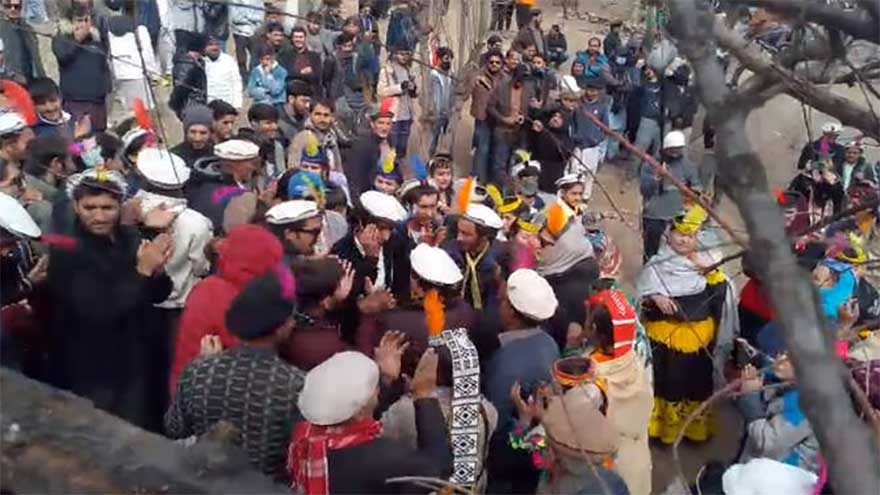
ISLAMABAD: The Kalash tribe in Chitral valley has begun its annual Chawmos festival, an ancient winter celebration that attracts both local and foreign tourists. The festival, which lasts for two weeks, combines traditional rituals, music, dance, and feasting, preserving the unique culture of Pakistan’s smallest minority community.
Read More: Chomos — the longest and most sacred festival of Kalash tribe
The Kalash, a group of around 4,000 people, reside in the Hindu Kush mountains and follow an ancient polytheistic faith. During Chawmos, they gather to mark the winter season and the upcoming new year, performing ceremonies that include singing, dancing, and animal sacrifices. The celebrations also involve communal feasts and distribution of fruits, vegetables, and dry fruits to spread peace and harmony.
Chawmos- the ancient winter festival of the Kalash people is in full swing across the Kalash valleys. Held each December around the winter solstice, the festival marks the end of the year’s harvest, welcomes the Kalash New Year and features fire purification rituals, traditional… pic.twitter.com/g4dlPTDwq7
— Chitral (@ChitralPK) December 17, 2025
The Khyber Pakhtunkhwa (KP) tourism department confirmed that the festival is being celebrated across all three Kalash valleys — Rumbur, Bumburet, and Birir. The department highlighted that Chawmos not only preserves cultural heritage but also attracts a growing number of tourists each year, boosting local tourism and awareness of Kalash traditions.
Authorities are facilitating the festival to ensure the safety and enjoyment of visitors. Police personnel have been deployed to provide security and assist tourists throughout the event. The KP tourism department emphasized the significance of such festivals in promoting cultural understanding and supporting the livelihoods of the local community.
Chawmos offers a rare glimpse into the traditions and way of life of the Kalash people, showcasing their vibrant music, colorful attire, and age-old rituals. The festival also serves as an opportunity for cultural exchange, allowing tourists to witness and participate in a centuries-old tradition that continues to thrive in modern Pakistan.
The Kalash festival remains a symbol of resilience and cultural pride, demonstrating how minority communities maintain their heritage while welcoming outsiders to experience their unique celebrations.